
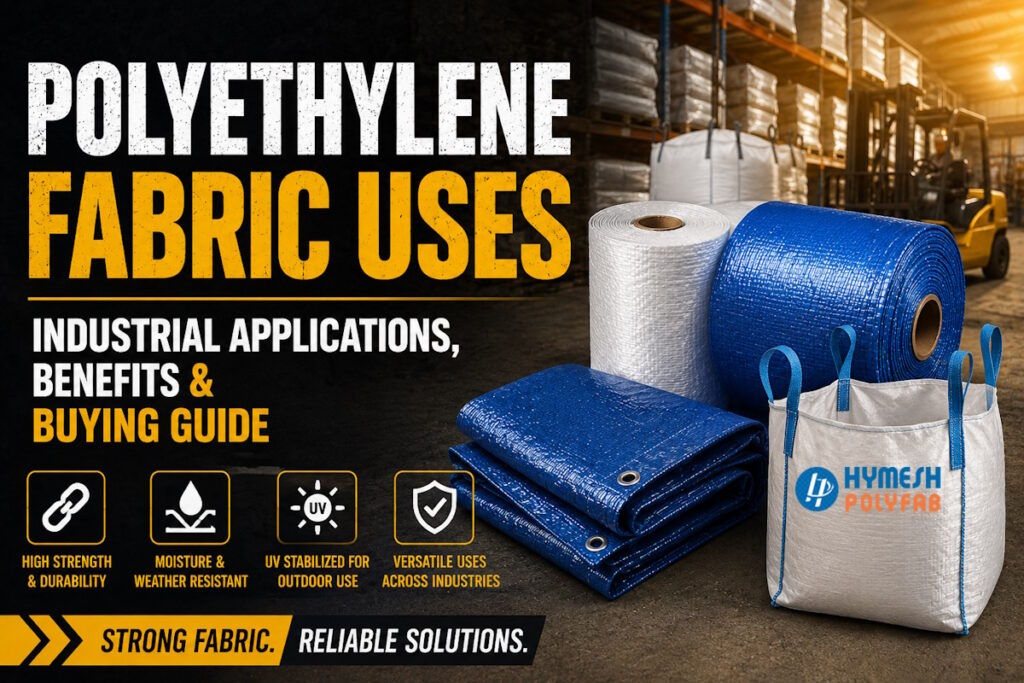
In industrial packaging, bulk logistics, and agricultural containment, choosing the correct material specification is the difference between seamless supply chain operations and costly product loss.
Procurement managers often face a complex array of material choices, technical codes, and structural compositions.
Selecting a fabric that lacks the necessary environmental stability, tensile strength, or barrier properties can lead to bag bursts, moisture contamination, and compromised shipments during long transit cycles.
Among the various polymer materials available, industrial-grade polyethylene stands out as a highly adaptable and robust option. Understanding the specific industrial polyethylene fabric uses allows business owners, exporters, and logistics managers to match the material specifications to their operational demands. This comprehensive buying guide clarifies the engineering advantages, applications, and procurement strategies necessary to source the ideal woven fabric for your business requirements.
Need Help Choosing the Right Polyethylene Fabric?
Understanding Polyethylene Fabric and Its Core Properties
Before exploring the wide range of industrial applications, it is essential to analyze the structural characteristics of this material. Woven polyethylene is not a solid sheet of plastic, instead, it is manufactured by extruding high-density polyethylene resin into thin tapes, drawing them to increase tensile strength, and weaving them into a high-strength grid structure. This method of construction provides multi-directional tear resistance and reliable load-bearing capacity.
What is Polyethylene Woven Fabric?
Woven polyethylene fabric is engineered for applications requiring high durability, impact resistance, and weatherability. The base polymer, High-Density Polyethylene, offers exceptional chemical resistance and low moisture absorption, making it an ideal choice for outdoor and industrial environments. In its woven form, hdpe woven fabric maintains its structural integrity even under substantial physical stress, preventing the spreading of punctures or tears.
Molecular Density and Tensile Strength
The performance of the fabric is heavily influenced by the molecular structure of the raw polymer. High-Density Polyethylene features minimal branching in its polymer chains, resulting in a tighter, stronger crystalline structure than Low-Density Polyethylene. This high molecular density translates to a superior strength-to-density ratio. When extruded into flat tapes and woven, this material can withstand high drop impact pressures and heavy weight loads, which is essential for transporting bulk solid materials across global distribution networks.
Environmental and Chemical Resistance
Industrial storage and transportation often expose packaging materials to harsh environmental elements, including corrosive chemicals, acidic soils, moisture, and ultraviolet radiation. Polyethylene naturally resists degradation from acids, alkalis, and organic solvents. To combat ultraviolet degradation during prolonged outdoor exposure, specialized UV stabilizers can be integrated during the resin extrusion process. This treatment ensures the fabric retains its tensile strength and does not become brittle or powdery under direct sunlight.
Primary Polyethylene Fabric Uses Across Industries
Because of its high versatility and customizable nature, the industrial applications of this material span several major economic sectors, from construction to commercial agriculture.
Industrial and Heavy-Duty Bulk Packaging
The primary domain of woven polyethylene is heavy-duty bulk packaging. Industrial materials such as cement, dry chemicals, fertilizers, minerals, and polymer resins require packaging that can withstand rough handling by forklifts and automated conveyors. Woven bags made from high-density polyethylene prevent tearing during lifting and stack securely in warehouses without slipping. The structural stability of the fabric ensures that fine powdered materials do not sift through the weave, keeping the workspace clean and minimizing product wastage.
Agricultural and Horticultural Applications
In the agricultural sector, the diversity of polyethylene fabric uses becomes highly visible. Farms and commercial agricultural operations rely on this material for bulk grain storage covers, crop protection screens, weed control mats, and temporary storage silos. Because the material does not absorb water and is resistant to rot, mildew, and soil microbes, it can remain in direct contact with damp soil and organic matter for long periods without losing its structural integrity. It provides a reliable shield against pests, birds, and heavy rain, preserving harvest quality.
Logistics, Warehousing, and Tarpaulin Covers
Exporters and logistics companies utilize high-strength woven polyethylene to manufacture durable tarpaulins, vehicle covers, and protective liners for shipping containers. Open-top shipping containers and flatbed trucks require robust weather protection during long-distance transits. Laminated versions of this fabric act as a windproof and waterproof barrier, protecting valuable cargo from road salt, heavy rain, and solar heat. In warehousing, large storage covers protect industrial machinery and palletized goods from dust contamination and condensation.
Technical Comparison: HDPE vs PP Woven Fabric
A frequent challenge for procurement managers is choosing between HDPE vs PP woven fabric. While both materials are strong, economical polyolefins, they display distinct behaviors under different environmental and physical conditions.
Key Differences in Material Performance
Polypropylene woven fabric is generally characterized by a higher melting point, greater rigidity, and excellent flex fatigue resistance, making it highly suitable for applications requiring stiff, self-supporting bags. However, polypropylene is more susceptible to low-temperature embrittlement, meaning it can become fragile and crack in freezing conditions. High-density polyethylene, on the other hand, exhibits superior low-temperature flexibility, better impact strength, and excellent chemical resistance, making it the preferred choice for cold storage environments and rugged outdoor storage.
When to Choose HDPE Fabric over PP
Procurement teams should choose high-density polyethylene when the packaging or cover must withstand extreme weather variations, cold storage, or rough physical transport over long distances. High-density polyethylene is also preferred when chemical inertness is the highest priority, such as when shipping highly acidic or alkaline chemicals. Polypropylene is often chosen for standard dry-bulk applications where cost efficiency under normal temperatures is the primary driving factor. Selecting the incorrect polymer can result in premature bag failure during cold-weather handling or material degradation during outdoor storage.
Still Deciding Between HDPE and PP Woven Fabric?
Maximizing Protection: Laminated vs Unlaminated Fabric Specs
Once the base polymer is chosen, the next critical technical specification to define is whether the application requires a laminated or unlaminated fabric structure.
The Role of Laminated Woven Fabric in Moisture Barriers
Standard woven fabric naturally contains microscopic gaps between the intersecting warp and weft tapes. While this allows for breathability, which is useful for agricultural products like potatoes or onions, it is highly problematic for moisture-sensitive materials like cement, fine chemicals, sugar, or flour. To address this, a micro-thin layer of molten polyethylene film can be applied to one or both sides of the woven substrate, creating a high-performance laminated woven fabric. This lamination layer seals the microscopic gaps, offering a reliable barrier against ambient moisture, dust infiltration, and external liquid exposure.
Choosing the Right GSM and Coating Thickness
The weight of the woven fabric is measured in Grams per Square Meter, or GSM, while the lamination layer is typically specified in microns or GSM. A low GSM fabric, ranging from 50 to 80 GSM, is suitable for lightweight packaging and temporary covers. Heavy-duty industrial packaging and long-term storage tarpaulins require a higher fabric density, typically between 100 to 200 GSM or more, coupled with a robust 20 to 30 GSM lamination layer. Sourcing the correct GSM ensures that the packaging is neither over-engineered, which increases shipping costs, nor under-engineered, which increases the risk of product loss during transit.
Procurement Checklist: Sourcing High-Quality Polyethylene Fabric
Sourcing industrial fabrics on a global scale requires strict quality control and precise material specifications. Relying solely on the lowest price per kilogram often leads to receiving fabric with high filler content, low tensile strength, or insufficient UV stabilization.
Avoiding Common Sourcing Pitfalls
One of the most common sourcing mistakes is purchasing woven fabrics that contain excessive amounts of calcium carbonate filler. While filler is used to reduce production costs, an excess of it severely degrades the tensile strength, elasticity, and UV resistance of the fabric, leading to premature tearing and rapid disintegration under sunlight. Buyers must verify the virgin polymer ratio and demand certified testing documentation from their manufacturer to ensure the material can withstand long-term physical stresses.
Key Parameters to Verify with Your Manufacturer
When finalizing your purchase agreement with a fabric manufacturer, ensure you specify and verify the following technical parameters:
- Tensile Strength: Request the warp and weft breaking strength metrics, measured in Newtons per strip, to ensure the fabric can handle your maximum load requirements.
- UV Stabilization: Specify the exact Kly or hours of UV exposure the fabric is rated to withstand before losing its original tensile strength.
- Weave Density: Verify the tape count per inch, such as 10×10 or 12×12, which directly influences the tear resistance and overall stability of the weave.
- Lamination Adhesion: Ensure the lamination peel strength is verified so that the protective coating does not delaminate under high friction or physical handling.
Sourcing Custom Polyethylene Fabric Specifications
Sourcing high-quality industrial packaging requires a partner who understands the balance between polymer science and real-world logistics. Selecting the right combination of high-density polyethylene, weave density, lamination thickness, and UV additives is key to protecting your assets, preventing product wastage, and maintaining supply chain efficiency.
When evaluating suppliers, look for proven manufacturing capabilities, strict quality control processes, customization options, and the ability to produce woven fabrics that meet your application’s performance requirements. Working with an experienced manufacturer helps ensure reliable product quality, timely delivery, and long-term value for industrial packaging, agriculture, logistics, and construction applications.
Ready to Source High-Quality Polyethylene Fabric?