
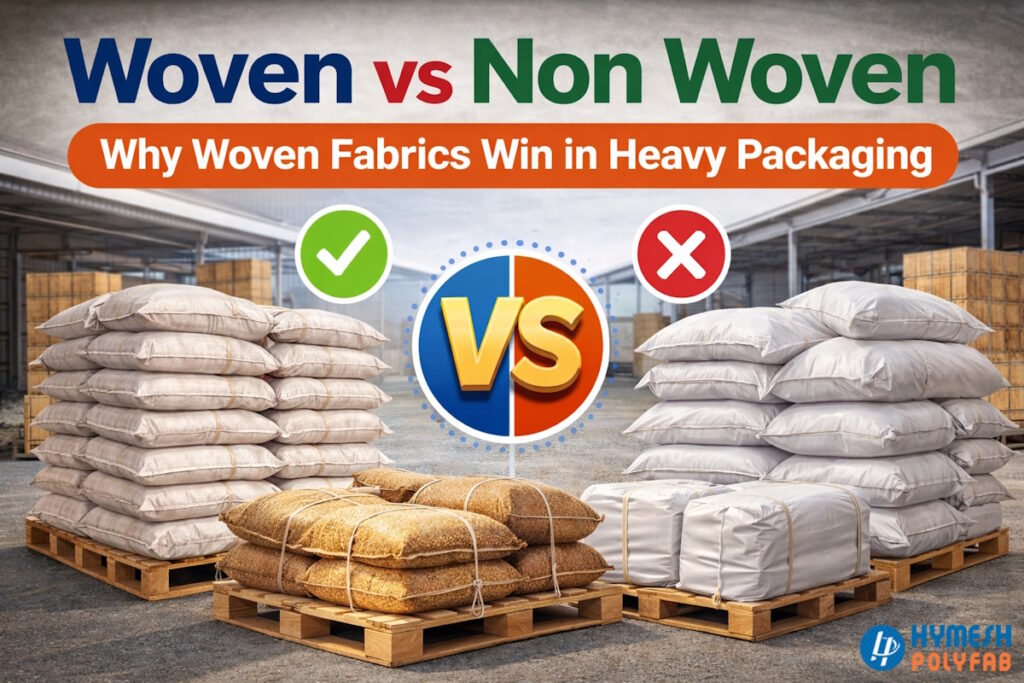
Packaging plays a very important role in today’s world.
From food grains to cement, from chemicals to farm products, strong packaging is needed to keep goods safe during storage and transport.
When it comes to heavy packaging, choosing the right fabric makes a big difference.
Two common options used in the packaging industry are woven and non-woven fabrics.
Many people often compare woven vs non woven materials but do not fully understand how different they really are. While both types have their own uses, woven fabrics clearly perform better in heavy packaging applications. This article explains in detail why woven polyethylene fabrics are stronger, more reliable, and more cost effective than non-woven fabrics for heavy packaging needs.
Confused about woven vs non woven fabrics for heavy packaging?
Understanding the Basics of Packaging Fabrics
Before comparing woven vs non woven, it is important to understand what these fabrics are and how they are made.
What Are Woven Fabrics?
Woven fabrics are made by weaving strips of plastic together in a crisscross pattern. In heavy packaging, these strips are usually made from high density polyethylene or polypropylene. The weaving process creates a tight and strong structure.
HDPE Woven Fabrics are widely used in making sacks, bags, and covers for heavy goods. The woven pattern helps the fabric handle high weight and pressure without tearing.
What Are Non-Woven Fabrics?
Non-woven fabrics are made by bonding fibers together using heat, pressure, or chemicals. The fibers are not woven or knitted. This makes the fabric softer and lighter, but also weaker compared to woven materials.
Non-woven fabrics are commonly used for medical products, hygiene items, and light packaging where strength is not the main requirement.
Woven vs Non Woven Fabric in Heavy Packaging
When comparing woven vs non woven fabric for heavy packaging, performance matters more than appearance. Heavy packaging demands strength, durability, and safety.
Strength and Load Capacity
One of the biggest reasons why woven polyethylene fabrics outperform non-woven is strength.
Woven fabrics can carry heavy loads without breaking. The woven structure spreads weight evenly across the fabric. This makes them ideal for packaging products like cement, sand, grains, fertilizers, animal feed, and chemicals.
Non-woven fabrics do not have this strength. The bonded fibers can separate under heavy pressure, leading to tears and damage.
Tear Resistance
Heavy packaging often goes through rough handling. Bags are lifted, stacked, dragged, and sometimes dropped.
HDPE Woven Fabrics offer excellent tear resistance. Even if a small cut occurs, the tear does not spread easily because of the woven pattern.
In non-woven fabrics, once a tear starts, it spreads quickly. This can cause complete failure of the package and loss of goods.
Durability Over Time
Durability is another area where woven vs non woven shows a clear difference.
Long-Term Use
Woven polyethylene fabrics are designed for long-term use. They can withstand repeated handling, exposure to dust, moisture, and sunlight.
Non-woven fabrics are mostly made for short-term or single-use applications. They lose strength over time and are not suitable for repeated use.
Resistance to Weather Conditions
Heavy packaging is often stored outdoors or transported over long distances.
HDPE Woven Fabrics perform well in different weather conditions. They resist moisture, do not absorb water easily, and can handle heat better.
Non-woven fabrics can weaken when exposed to moisture and sunlight. This limits their use in outdoor or long storage situations.
Cost Effectiveness in Heavy Packaging
When businesses compare woven vs non woven, cost is always a major factor.
Better Value for Money
While woven fabrics may cost slightly more upfront, they offer better value in the long run. Their strength and durability reduce product loss, damage, and replacement costs.
Non-woven fabrics may appear cheaper, but they fail faster in heavy packaging. This leads to higher costs due to damaged goods and re-packaging.
Reusability
HDPE Woven Fabrics can be reused multiple times. Many industries use the same woven bags for several cycles.
Non-woven fabrics are mostly disposable. They tear easily and cannot be reused for heavy loads.
Thinking of switching to stronger and more reliable packaging?
Safety and Product Protection
Protecting the product inside the package is the main goal of heavy packaging.
Secure Containment
Woven polyethylene fabrics hold their shape well. They keep the contents secure and prevent leaks.
Non-woven fabrics can stretch or deform under pressure, which may cause spillage.
Reduced Risk of Accidents
Strong packaging reduces the risk of accidents during handling and transport. Bags that tear or burst can cause injuries and losses.
The superior strength of HDPE Woven Fabrics makes them safer for workers and transport teams.
Performance in Transportation and Storage
Transportation is one of the toughest tests for packaging materials.
Handling During Transport
Woven bags are easier to handle with forklifts, hooks, and conveyors. They maintain their shape even when stacked.
Non-woven bags may collapse or tear when lifted or stacked, especially under heavy weight.
Stackability
HDPE Woven Fabrics allow better stacking of goods in warehouses and trucks. This improves space usage and reduces transport costs.
Non-woven packaging does not offer the same level of stack stability.
Environmental Considerations
Many people believe non-woven fabrics are always better for the environment. This is not always true.
Recyclability
HDPE Woven Fabrics are recyclable. They can be processed and reused to make new products.
Because they last longer and can be reused, they reduce waste over time.
Non-woven fabrics are often harder to recycle, especially when mixed with other materials.
Reduced Waste
Since woven bags last longer and can be reused, fewer bags are needed overall. This reduces waste generation.
Single-use non-woven packaging increases waste volume, especially in heavy industries.
Customization and Design Flexibility
Packaging is not just about strength. It is also about branding and information.
Printing and Branding
Woven polyethylene fabrics allow clear and long-lasting printing. Logos, instructions, and brand names stay visible even after handling.
Non-woven fabrics may not hold print as well, especially in rough conditions.
Size and Shape Options
HDPE Woven Fabrics can be made in many sizes and shapes to suit different packaging needs. This makes them suitable for a wide range of industries.
Industries That Prefer Woven Fabrics
Many industries clearly choose woven vs non woven fabrics based on performance needs.
Agriculture
Farmers and grain suppliers prefer woven bags for seeds, grains, and animal feed. These bags handle weight and moisture better.
Construction
Cement, sand, and building materials are almost always packed in woven bags because of their strength.
Chemical and Industrial Goods
Industrial chemicals and raw materials require strong and secure packaging. HDPE Woven Fabrics meet these demands.
Food Industry
Many food products such as rice, flour, and sugar are packed in woven bags due to hygiene, strength, and protection.
Limitations of Non-Woven Fabrics in Heavy Packaging
To fully understand woven vs non woven, it is important to look at the limits of non-woven fabrics.
Low Load Capacity
Non-woven fabrics are not designed to carry heavy loads. Using them for heavy packaging increases the risk of failure.
Short Lifespan
They are suitable for light and temporary use only. Heavy packaging needs materials that last longer.
Higher Risk of Product Loss
Tearing, stretching, and bursting are common issues with non-woven packaging when used for heavy goods.
Why HDPE Woven Fabrics Are the Best Choice
HDPE Woven Fabrics combine strength, durability, safety, and cost efficiency. They are made specifically to handle heavy loads and tough conditions.
Their woven structure gives them a clear advantage in heavy packaging. This is why industries across the world rely on them for safe transport and storage.
When comparing woven vs non woven fabric for heavy packaging, woven fabrics clearly stand out as the better option.
Conclusion
The choice between woven vs non woven fabrics depends on the application. For light and short-term uses, non-woven fabrics may be enough. But when it comes to heavy packaging, strength and reliability cannot be compromised.
Woven polyethylene fabrics outperform non-woven fabrics in every important area for heavy packaging. They offer higher strength, better durability, improved safety, and greater value over time.
HDPE Woven Fabrics are trusted by industries that handle heavy, valuable, and sensitive goods. Their proven performance makes them the smart and practical choice.
If your business deals with heavy packaging, choosing woven fabrics is not just an option. It is a necessity for protecting products, reducing losses, and ensuring smooth operations.
Ready to reduce losses and improve packaging strength?