
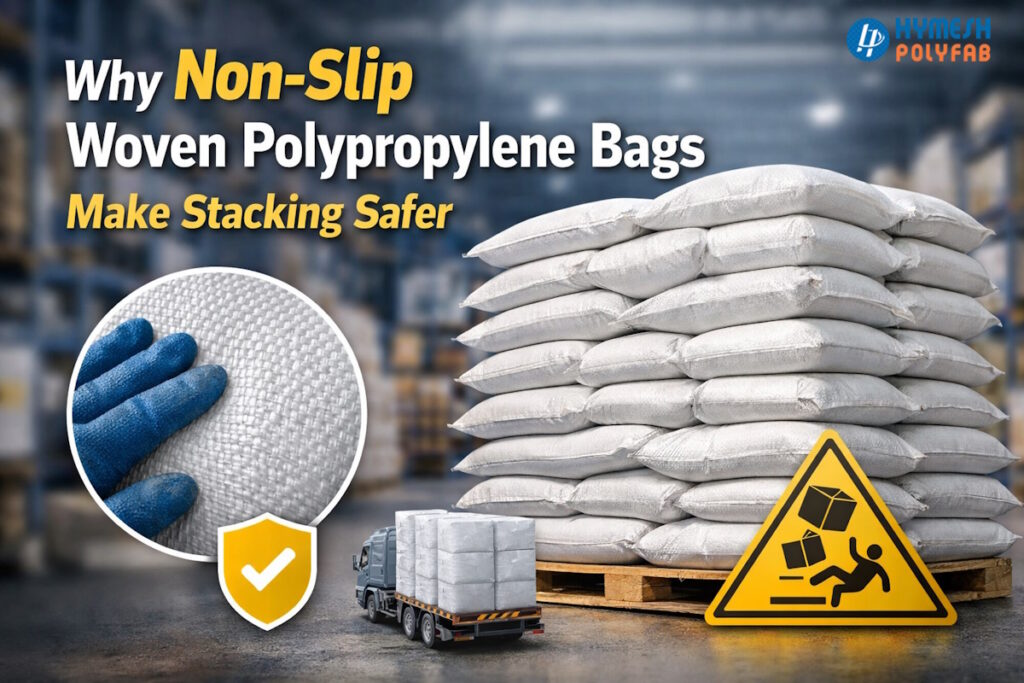
In today’s world of packaging and logistics, safety and efficiency are very important. Whether it is agriculture, construction, food, or chemicals, goods need to be stored and transported in a way that reduces damage and risk.
One of the most widely used solutions is woven polypropylene bags. These bags are known for their strength, flexibility, and cost-effectiveness.
However, when it comes to stacking goods in warehouses or during transport, a special feature becomes very important, and that is the non-slip property.
This article explains in simple terms why non-slip woven polypropylene bags are important for safe stacking. It also covers how they are made, their benefits, and how they compare with other materials like HDPE woven fabric. We will also explore how different materials used in packaging play an important role, along with the strength of woven fabrics in modern applications.
Looking for reliable woven polypropylene bags for safe stacking?
Understanding Woven Polypropylene Bags
Woven polypropylene bags are made from plastic fibers that are woven together to form a strong fabric. This fabric is then cut and stitched into bags. These bags are lightweight but very strong, which makes them suitable for carrying heavy materials like grains, cement, sugar, fertilizers, and more.
The base material used is polypropylene, which is a type of plastic that is known for its durability and resistance to moisture. When these fibers are woven together, they form a tight structure that can handle pressure and weight without tearing.
These bags are also easy to print on, which helps companies display branding and product information clearly.
What Makes a Bag Non-Slip
A non-slip woven polypropylene bag is designed in a way that increases friction between bags when they are stacked. This means the bags do not slide easily over each other. The non-slip effect is usually achieved by applying a special coating or by designing the surface with a textured pattern.
In simple words, these bags are made to “grip” each other when placed one on top of another. This feature becomes very important when bags are stacked in large numbers in warehouses or during transportation.
Why Safe Stacking Matters
Safe stacking is important for several reasons:
- Preventing accidents
If stacked bags slip and fall, they can cause injuries to workers. In industries where heavy materials are handled, this can be dangerous. - Reducing product damage
When bags fall, the contents inside can get damaged. This leads to financial loss and waste. - Better use of space
Proper stacking allows more goods to be stored in a limited space. This improves storage efficiency. - Smooth transportation
During transport, especially in trucks or ships, movement can cause bags to shift. Non-slip bags help keep everything stable.
Because of these reasons, using the right polypropylene packaging material becomes very important.
Role of Non-Slip Feature in Woven Polypropylene Bags
The non-slip feature plays a key role in making stacking safer and more reliable. Here are some ways it helps:
1. Improved Stability
When bags are stacked, the bottom layers carry a lot of weight. If the surface is smooth, the bags can slide. Non-slip woven polypropylene bags reduce this problem by increasing grip.
2. Higher Stacking Height
With better grip, bags can be stacked higher without the risk of falling. This helps businesses store more products in the same space.
3. Reduced Need for Extra Support
Without non-slip bags, companies may need to use additional supports like straps or pallets. Non-slip bags reduce this need, saving time and cost.
4. Safer Handling
Workers feel more confident handling bags that do not slip easily. This improves overall safety in the workplace.
Want to upgrade to non-slip woven polypropylene bags for better safety?
How Woven Polypropylene Roll Is Used
A woven polypropylene roll is the base material from which bags are made. It is produced in large sheets or rolls after the weaving process. These rolls can then be cut into different sizes depending on the type of bag needed.
Manufacturers can also apply non-slip coatings directly on the woven polypropylene roll before it is converted into bags. This ensures that every bag has a consistent non-slip surface.
Using rolls makes production faster and more efficient. It also allows customization in terms of size, thickness, and design.
Importance of Polypropylene Packaging Material
Polypropylene packaging material is widely used because of its many benefits:
- It is strong and durable
- It resists moisture and chemicals
- It is lightweight
- It is cost-effective
- It can be reused and recycled
When this material is used to create non-slip woven polypropylene bags, it becomes even more valuable. It not only protects the product inside but also ensures safe storage and transport.
Polypropylene Woven Fabrics and Their Strength
Polypropylene woven fabrics are the backbone of these bags. The weaving process creates a crisscross pattern that distributes weight evenly. This makes the fabric strong and resistant to tearing.
The strength of these fabrics allows the bags to carry heavy loads without breaking. When combined with a non-slip surface, the fabric becomes ideal for stacking.
Another advantage is that these fabrics can be laminated or coated to improve their properties. For example, lamination can make the bag waterproof, while special coatings can add the non-slip feature.
Comparison with HDPE Woven Fabric
HDPE woven fabric is another material used in packaging. HDPE stands for High-Density Polyethylene. Like polypropylene, it is also a type of plastic.
Here is a simple comparison:
- Strength: Both materials are strong, but polypropylene is often more flexible.
- Weight: Polypropylene is usually lighter.
- Cost: Polypropylene is generally more affordable.
- Surface finish: Polypropylene allows better printing and coating options.
When it comes to non-slip properties, woven polypropylene bags are often preferred because they can be easily treated with coatings that improve grip.
Applications of Non-Slip Woven Polypropylene Bags
These bags are used in many industries:
1. Agriculture
Farmers use these bags to store grains, seeds, and fertilizers. Safe stacking is important in storage facilities to avoid loss.
2. Construction
Cement and sand are often packed in woven polypropylene bags. Non-slip bags help keep stacks stable at construction sites.
3. Food Industry
Products like sugar, flour, and rice are stored in these bags. Hygiene and safety are both important.
4. Chemical Industry
Chemicals need to be handled carefully. Non-slip bags reduce the risk of spills.
Environmental Benefits
Woven polypropylene bags also have environmental advantages:
- They can be reused multiple times
- They are recyclable
- They reduce the need for single-use packaging
Using durable polypropylene packaging material helps reduce waste and supports sustainable practices.
Cost Efficiency
Non-slip woven polypropylene bags may cost slightly more than regular bags, but they save money in the long run. Here’s how:
- Less product damage
- Fewer accidents and injuries
- Reduced need for extra packaging materials
- Better storage efficiency
This makes them a smart investment for businesses.
Customization Options
One of the biggest advantages of woven polypropylene bags is that they can be customized:
- Different sizes and shapes
- Printed logos and designs
- Laminated or non-laminated
- Non-slip coatings
Manufacturers can design bags according to the needs of different industries.
Future of Woven Polypropylene Bags
The demand for woven polypropylene bags is growing. As industries focus more on safety and efficiency, the need for non-slip features will also increase.
New technologies are being developed to improve the quality of Polypropylene woven fabrics. These include better coatings, stronger fibers, and more eco-friendly production methods.
Conclusion
Non-slip woven polypropylene bags play a very important role in safe stacking. They provide stability, reduce accidents, and protect products during storage and transport. Made from strong polypropylene packaging material, these bags are reliable and cost-effective.
The use of woven polypropylene roll in manufacturing ensures consistency and efficiency. At the same time, Polypropylene woven fabrics offer the strength needed for heavy loads. Compared to alternatives like HDPE woven fabric, polypropylene bags offer better flexibility and customization.
In simple terms, if safety and efficiency matter, non-slip woven polypropylene bags are the right choice. They not only make stacking safer but also improve overall operations in many industries.
As the world moves towards better packaging solutions, these bags will continue to be an important part of modern logistics.
Ready to switch to safer and more efficient packaging solutions?