
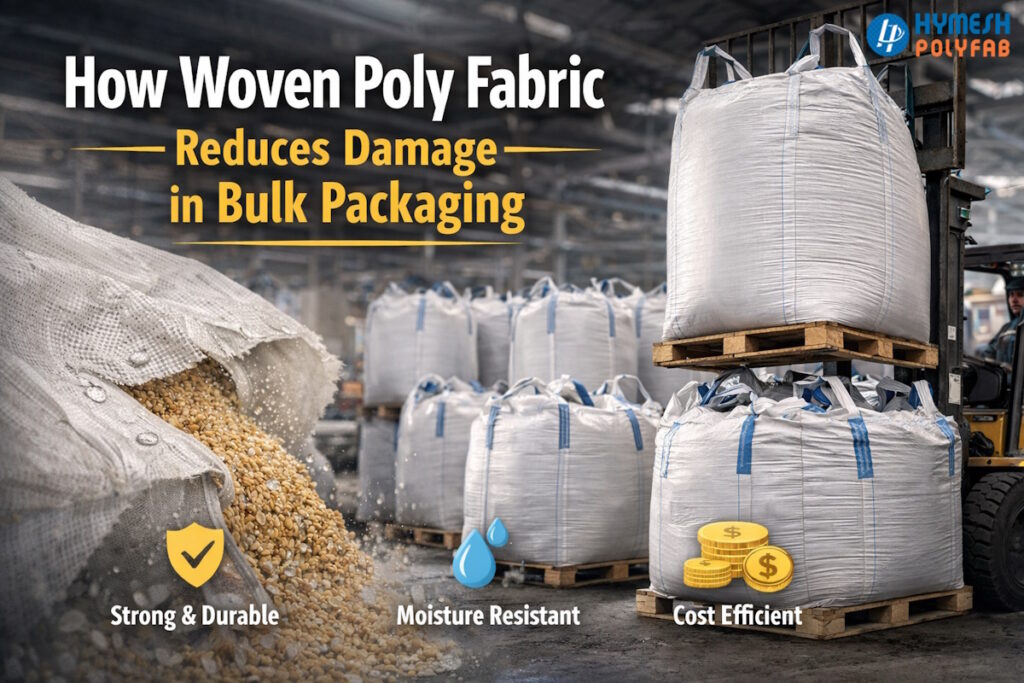
Bulk packaging plays a very important role in many industries. From agriculture to construction, from food storage to chemicals, large quantities of goods need to be packed, stored, and transported safely.
When products move in bulk, the risk of damage becomes higher. This damage can happen due to tearing, moisture, pressure, rough handling, or long storage time.
Because of this, choosing the right bulk packaging material is very important.
One material that has gained strong trust across industries is Woven Poly Fabric. This fabric is known for its strength, durability, and ability to protect goods during storage and transport. Many businesses now prefer woven poly solutions because they help reduce product loss, save money, and improve packaging safety.
In this article, we will explore how woven poly fabric helps reduce damage in bulk packaging. We will also discuss how polyethylene woven fabric works, why it is a reliable bulk packaging material, and how choosing the right HDPE Woven Fabrics Supplier can make a big difference.
Looking for strong bulk packaging solutions?
Understanding Bulk Packaging and Its Challenges
Bulk packaging means packing large volumes of goods in a single container or bag. This type of packaging is common for grains, seeds, fertilizers, cement, animal feed, sugar, chemicals, and many other products.
While bulk packaging is cost effective, it comes with many challenges:
- Heavy weight puts pressure on packaging
- Long distance transport causes friction and impact
- Exposure to moisture can spoil goods
- Rough handling can tear or break bags
- Stacking can cause bags to burst or collapse
If the packaging material is weak, damage can happen quickly. This leads to product loss, customer complaints, and financial loss. That is why strong and reliable materials like woven poly fabric are used to handle these challenges.
What Is Woven Poly Fabric
Woven Poly Fabric is made from plastic strips that are woven together in a tight pattern. These strips are usually made from polyethylene, which is a strong and flexible plastic material.
The weaving process creates a fabric that has high strength and tear resistance. Unlike simple plastic sheets, woven poly fabric does not tear easily. Even if one strand breaks, the rest of the fabric holds together.
This special structure makes woven poly fabric ideal for bulk packaging where strength and safety are required.
What Is Polyethylene Woven Fabric
Polyethylene woven fabric is a type of woven poly fabric made specifically from polyethylene plastic. Polyethylene is known for being lightweight, strong, and resistant to moisture and chemicals.
Polyethylene woven fabric offers several benefits:
- High tensile strength
- Resistance to water and humidity
- Long life even in tough conditions
- Flexibility without breaking
- Ability to hold heavy loads
Because of these features, polyethylene woven fabric is widely used for bulk packaging bags, sacks, and covers.
Why Woven Poly Fabric Is Ideal for Bulk Packaging Material
When selecting a bulk packaging material, businesses look for durability, cost efficiency, and protection. Woven poly fabric meets all these needs.
Here are the main reasons why it is considered one of the best bulk packaging materials available today.
High Strength Reduces Tearing and Breakage
One of the biggest causes of damage in bulk packaging is tearing. Heavy loads, sharp edges, or rough handling can easily tear weak packaging materials.
Woven poly fabric is designed to handle high stress. The woven structure spreads weight evenly across the fabric. This reduces pressure on any single point and prevents sudden tears.
Because of this strength, bags made from woven poly fabric can carry heavy materials like cement, grains, and chemicals without breaking.
Better Load Stability During Transport
During transport, bulk packaging goes through constant movement. Trucks vibrate, ships face waves, and containers shift during loading and unloading.
Woven poly fabric helps maintain load stability. The fabric does not stretch too much under pressure, which keeps the shape of the bag intact. This prevents bags from collapsing or bursting during transit.
Stable packaging means fewer accidents and less product loss.
Strong Resistance to Moisture Damage
Moisture is one of the biggest threats in bulk packaging. Products like grains, sugar, fertilizer, and cement can get damaged if exposed to water or humidity.
Polyethylene woven fabric has natural water resistance. It does not absorb moisture like paper or cloth. This keeps the contents dry even in humid conditions.
Many woven poly bags also come with inner liners for extra moisture protection. This added layer further reduces the risk of spoilage.
Protection Against Punctures and Abrasion
Bulk packaging materials often come in contact with rough surfaces. Forklifts, pallets, and stacking can cause abrasion and punctures.
Woven poly fabric has strong surface resistance. The woven pattern makes it difficult for sharp objects to puncture the fabric easily. Even when rubbed against rough surfaces, the fabric holds up well.
This resistance plays a major role in reducing damage during handling and storage.
Lightweight Material That Handles Heavy Loads
One of the advantages of woven poly fabric is that it is lightweight but very strong. This is important in bulk packaging because heavy packaging materials increase transport costs.
With woven poly fabric, businesses get strong packaging without extra weight. This helps reduce shipping costs while still protecting the goods.
Lightweight packaging also makes handling easier for workers, reducing the risk of accidents.
Long Storage Life Without Quality Loss
Many bulk goods are stored for long periods before use or sale. During storage, packaging material must maintain its strength and shape.
Woven poly fabric does not weaken easily over time. It resists moisture, pests, and environmental changes. This ensures that the packaging stays strong throughout the storage period.
Long lasting packaging means fewer replacements and lower overall costs.
Better Stacking and Warehouse Safety
In warehouses, bulk packages are often stacked on top of each other. Weak packaging can collapse under pressure, causing damage and safety risks.
Woven poly fabric bags maintain their shape even when stacked. Their strength allows them to bear weight without tearing or slipping.
This improves warehouse safety and reduces damage caused by falling or collapsing bags.
Cost Effective Solution for Bulk Packaging
Damage in bulk packaging leads to waste and extra expenses. Using strong materials helps reduce these losses.
Woven poly fabric is cost effective because:
- It reduces product loss
- It lowers replacement costs
- It lasts longer than many other materials
- It supports reuse in some cases
Over time, investing in quality woven poly fabric saves money for businesses.
Ready to upgrade your bulk packaging strength?
Flexibility for Different Packaging Needs
Bulk packaging comes in many forms. Some products need bags, others need covers or liners.
Woven poly fabric is flexible and can be used for many packaging solutions:
- Woven sacks
- Bulk bags
- Protective covers
- Liners for containers
This flexibility allows businesses to use one material for many purposes.
Customization Improves Product Protection
Woven poly fabric can be customized based on product needs. Thickness, weave density, coating, and size can all be adjusted.
Customization helps reduce damage by matching the packaging to the product. For example:
- Heavier products need thicker fabric
- Moisture sensitive goods need coated fabric
- Sharp materials need higher tear resistance
Choosing the right design improves safety and performance.
Environment Friendly Benefits of Woven Poly Fabric
Many businesses today focus on sustainability. Woven poly fabric supports this goal.
Polyethylene woven fabric can be reused and recycled. Its long life reduces the need for frequent replacement, which lowers waste.
Some suppliers also offer eco friendly options with reduced environmental impact.
Role of a Reliable HDPE Woven Fabrics Supplier
Choosing the right material is important, but choosing the right supplier is equally important. A trusted HDPE Woven Fabrics Supplier ensures consistent quality and reliable supply.
A good supplier provides:
- High quality raw materials
- Proper weaving and coating
- Strong quality control
- Custom solutions for different industries
- Timely delivery
Working with an experienced HDPE Woven Fabrics Supplier helps businesses avoid poor quality materials that can lead to damage.
Quality Control Helps Reduce Packaging Failures
Not all woven poly fabrics are the same. Poor quality fabric may look strong but fail under pressure.
A reliable supplier tests the fabric for:
- Tensile strength
- Tear resistance
- Weight capacity
- Moisture resistance
These tests ensure the fabric performs well in real world conditions.
Industry Applications Where Woven Poly Fabric Reduces Damage
Woven poly fabric is used in many industries where bulk packaging safety is critical.
Agriculture Industry
Grains, seeds, and animal feed are safely stored and transported using woven poly bags. The fabric protects against moisture and pests.
Construction Industry
Cement, sand, and chemicals are packed in woven poly fabric bags that handle heavy weight and rough handling.
Chemical Industry
Chemicals need strong and leak resistant packaging. Polyethylene woven fabric provides the required protection.
Food Industry
Food products require clean, dry, and safe packaging. Woven poly fabric with liners meets food safety needs.
How Woven Poly Fabric Improves Brand Trust
Damaged products hurt a brand’s reputation. Customers expect goods to arrive safely.
Using strong bulk packaging material like woven poly fabric reduces complaints and returns. This builds trust with customers and improves brand image.
Reliable packaging shows professionalism and care.
Future of Bulk Packaging With Woven Poly Fabric
As industries grow, the demand for safe bulk packaging will increase. Woven poly fabric continues to evolve with better designs and improved strength.
New developments focus on:
- Higher load capacity
- Better environmental performance
- Improved coating technologies
- Smarter packaging solutions
These improvements will further reduce damage in bulk packaging.
Conclusion
Bulk packaging damage is a serious issue that affects product quality, costs, and customer satisfaction. Choosing the right packaging material is the key to solving this problem.
Woven Poly Fabric stands out as a strong, reliable, and cost effective solution. Its woven structure, moisture resistance, high strength, and flexibility make it ideal for protecting goods in bulk.
Polyethylene woven fabric offers durability and long life, making it a trusted bulk packaging material across industries. When sourced from a reliable HDPE Woven Fabrics Supplier, it delivers consistent performance and peace of mind.
By investing in quality woven poly fabric, businesses can reduce damage, save money, and ensure safe delivery of their products. This makes woven poly fabric not just a packaging choice, but a smart business decision.
Looking for reliable woven fabric suppliers from India?