
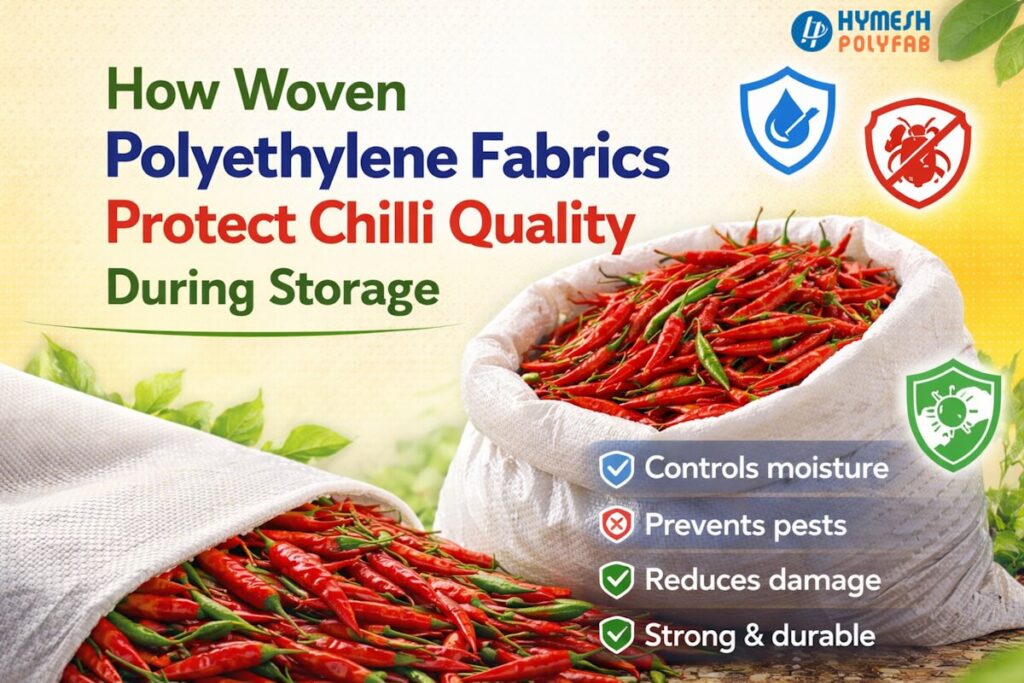
Chilli is one of the most important spice crops in the world. It is used daily in homes, restaurants, and food industries.
Farmers work very hard to grow good quality chillies, but the real challenge starts after harvest. If chillies are not stored properly, they can lose color, flavor, weight, and market value.
Moisture, pests, mold, and rough handling are the main reasons for damage during storage.
This is where polyethylene woven fabric plays a very important role. These fabrics are widely used for storing, packing, and transporting chillies safely. They help farmers, traders, and exporters protect chilli quality for a longer time. In this article, you will learn in detail how woven polyethylene fabrics protect chilli quality during storage and why they are trusted across the agriculture industry.
This article also works as a polyethylene woven fabrics guide for anyone involved in chilli storage or trade.
Looking for the right polyethylene woven fabric for safe chilli storage?
Understanding Chilli Storage Problems
Before learning how woven polyethylene fabrics help, it is important to understand the problems faced during chilli storage.
Moisture Damage
Chillies must stay dry during storage. If moisture enters the storage bags, it can cause mold growth. Mold damages chillies badly and makes them unsafe for use. Moisture can also cause clumping and rotting.
Pest and Insect Attack
Stored chillies often attract insects and rodents. These pests chew through weak packaging and spoil large quantities of chillies. Poor storage materials increase this risk.
Loss of Color and Aroma
Chillies are valued for their bright red color and strong aroma. Improper storage exposes chillies to excess air, heat, and sunlight. This reduces color strength and flavor.
Weight Loss and Breakage
When chillies are packed in weak bags, they can break during stacking or transport. Broken chillies lose weight and fetch lower prices in the market.
What Is Polyethylene Woven Fabric
Polyethylene woven fabric is made by weaving strips of polyethylene plastic together. These strips are strong, flexible, and lightweight. The weaving process creates a fabric that allows air circulation while maintaining strength.
This fabric is commonly used to make bags, sacks, and covers for agricultural products. Chillies are one of the most common products stored using this material.
Why Polyethylene Woven Fabric Is Ideal for Chilli Storage
There are many reasons why polyethylene woven fabrics are perfect for storing chillies.
Strong and Durable
Chillies are often stored in large quantities. Polyethylene woven fabric bags can hold heavy loads without tearing. This strength protects chillies during stacking and transport.
Breathable Structure
One of the biggest advantages is breathability. The woven structure allows air to pass through slowly. This prevents moisture buildup inside the bag and keeps chillies dry.
Lightweight and Easy to Handle
Despite being strong, these bags are light in weight. Farmers and workers can easily carry, load, and unload them without damage to the chillies.
Resistant to Tearing
Unlike paper or jute bags, polyethylene woven fabric does not tear easily. This reduces the chance of chilli spillage and contamination.
How Woven Polyethylene Fabrics Control Moisture
Moisture control is the most important factor in chilli storage.
Natural Ventilation
The woven design creates small gaps that allow air circulation. This helps release trapped moisture and keeps the chillies dry.
Protection from External Water
While allowing air movement, polyethylene woven fabric still protects chillies from rain and splashes. This balance is ideal for long-term storage.
Reduced Mold Growth
Dry conditions inside the bags reduce the risk of mold formation. This keeps chillies safe and usable for longer periods.
Role of Polyethylene Woven Fabric in Preventing Pest Damage
Pests are a major threat to stored chillies.
Tough Material
Polyethylene woven fabric is hard for insects and rodents to chew through. This provides better protection compared to weak packaging materials.
Secure Stitching and Sealing
Most woven bags are tightly stitched, leaving very little space for pests to enter. This adds an extra layer of safety.
Clean and Hygienic Storage
These fabrics do not absorb moisture or food particles easily. This makes them less attractive to pests.
Preserving Chilli Color and Quality
The market value of chillies depends heavily on color and appearance.
Protection from Excess Light
Many polyethylene woven fabric bags come with UV protection. This prevents color fading caused by sunlight.
Reduced Oxidation
Controlled airflow reduces direct exposure to air. This helps maintain the natural oils in chillies that give them color and aroma.
Clean Storage Environment
Since the bags do not release fibers or dust, chillies stay clean and visually appealing.
Preventing Weight Loss and Physical Damage
Chilli breakage leads to loss of weight and quality.
Cushioning Effect
The flexible woven structure absorbs minor shocks during transport. This reduces breakage.
Stable Stacking
Polyethylene woven fabric bags maintain their shape when stacked. This prevents crushing of chillies at the bottom.
Long-Term Strength
Even after months of storage, these bags remain strong. They do not weaken easily like natural fiber bags.
Importance of HDPE in Woven Polyethylene Fabrics
Many high quality woven bags are made using HDPE material.
What Is HDPE
HDPE stands for High Density Polyethylene. It is known for its strength and resistance to wear.
Benefits of HDPE for Chilli Storage
HDPE woven bags are more durable and long-lasting. They offer better protection against moisture, pests, and rough handling.
Choosing the Right HDPE Woven Fabrics Supplier
Selecting the right HDPE Woven Fabrics Supplier is very important. A good supplier provides strong fabric, proper weaving, and consistent quality. This directly affects chilli safety during storage.
Still confused about woven fabric quality and strength?
Polyethylene Woven Fabrics Guide for Chilli Storage
This section serves as a simple polyethylene woven fabrics guide for farmers and traders.
Bag Size Selection
Choose bag sizes based on storage needs. Overfilled bags increase pressure and damage chillies.
Proper Filling Method
Do not compress chillies tightly. Leave some space for air circulation.
Clean Storage Area
Always store bags in a dry and clean area. Even the best fabric needs a good environment to work effectively.
Use of Liners
In high humidity areas, plastic liners can be used inside woven bags for extra protection.
Environmental Benefits of Polyethylene Woven Fabric
Many people worry about plastic use, but woven polyethylene fabrics have environmental advantages.
Reusable and Long-Lasting
These bags can be reused many times. This reduces waste compared to single-use packaging.
Recyclable Material
Polyethylene is recyclable. Old bags can be processed and reused in other products.
Reduced Food Waste
By protecting chilli quality, these fabrics help reduce food loss. This is a major environmental benefit.
Cost Benefits for Farmers and Traders
Using polyethylene woven fabric is also cost-effective.
Lower Losses
Reduced spoilage means higher profits.
Affordable Packaging
These bags are cheaper than many alternatives when used over long periods.
Easy Availability
A reliable HDPE Woven Fabrics Supplier can provide large quantities at competitive prices.
Storage and Transport Advantages
Chillies often travel long distances.
Safe Transportation
Strong woven bags protect chillies from damage during transport.
Easy Stacking in Warehouses
Uniform bag shapes make storage organized and efficient.
Export Friendly Packaging
Polyethylene woven fabric bags meet many export standards for agricultural products.
Comparing Polyethylene Woven Fabric with Other Materials
Compared to Jute Bags
Jute absorbs moisture and attracts pests. Polyethylene woven fabric does not.
Compared to Paper Bags
Paper tears easily and cannot handle moisture. Woven polyethylene is much stronger.
Compared to Loose Storage
Loose storage exposes chillies to dust, pests, and moisture. Woven bags provide controlled protection.
Best Practices for Using Polyethylene Woven Fabric Bags
To get the best results, follow these tips.
- Always dry chillies completely before storage
- Avoid direct contact with water
- Store bags on pallets
- Do not place bags near chemicals
- Inspect bags regularly for damage
These steps improve storage life and quality.
Growing Demand for Polyethylene Woven Fabric in Agriculture
The use of polyethylene woven fabric is increasing every year.
- Farmers are becoming more aware of post-harvest losses
- Exporters need safe packaging solutions
- Warehouses require durable storage materials
This growing demand shows the trust placed in these fabrics.
Future of Chilli Storage with Woven Polyethylene Fabrics
As agriculture modernizes, storage solutions are improving.
- Better weaving technology
- Stronger HDPE materials
- Improved ventilation designs
These advancements will further protect chilli quality and increase shelf life.
Conclusion
Chilli storage is just as important as chilli farming. Without proper storage, farmers and traders lose money and quality. Polyethylene woven fabric offers a reliable and proven solution to these problems.
Its strength, breathability, moisture control, and pest resistance make it ideal for chilli storage. This article also serves as a complete polyethylene woven fabrics guide for anyone involved in agriculture or spice trading.
Choosing the right HDPE Woven Fabrics Supplier ensures you get high quality fabric that protects your chillies from harvest to market. With correct usage and proper storage practices, woven polyethylene fabrics help preserve color, flavor, weight, and value of chillies for a long time.
In simple terms, woven polyethylene fabrics do not just store chillies. They protect the hard work of farmers and ensure quality reaches consumers safely.
Ready to protect chilli quality during storage and transport?