
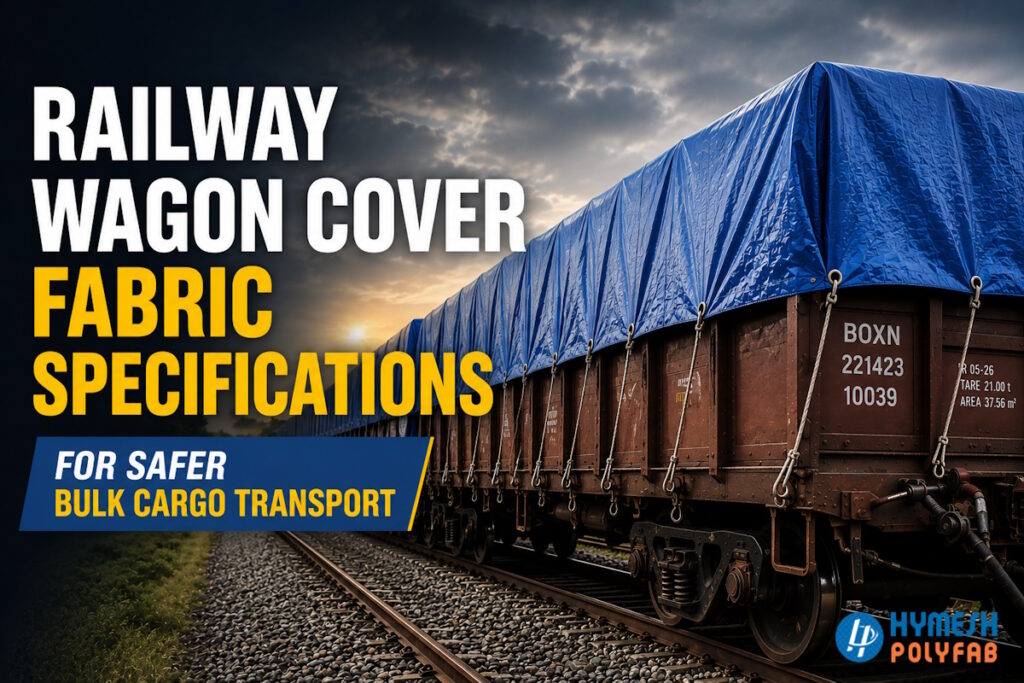
Railway freight operations represent one of the most demanding transport environments for bulk cargo.
Protecting sensitive commodities like cement, food grains, fertilizers, and minerals from severe weather during transit requires highly durable protective barriers.
Standard tarpaulins often fail under the extreme wind speeds, constant friction, and heavy rainfall encountered on long rail journeys, making the selection of a robust railway wagon cover a critical decision for logistics managers and procurement officers.
Sourcing these heavy-duty protective covers requires a deep understanding of polymer science and material specifications. Relying on generic plastic sheets leads to premature tearing, water seepage, and costly cargo damage claims. To avoid these operational failures, industrial buyers must evaluate structural properties such as fabric weight, polymer configuration, lamination quality, and tensile limits when choosing an hdpe woven fabric for heavy-duty transit protection.
Need custom HDPE woven fabric for railway wagon covers?
Understanding the Role of HDPE Woven Fabric in Railway Transit
Before finalizing your procurement strategy, it is essential to understand why specific polymer structures outperform others under heavy mechanical stress. Railway transport exposes cargo to high-velocity winds and aerodynamic drag, requiring materials that offer an optimal balance of flexibility and high tensile resistance.
Why HDPE is the Standard for Wagon Protection
High-Density Polyethylene, or HDPE, provides the molecular strength necessary to withstand continuous outdoor exposure. An hdpe fabric roll is manufactured by extruding polyethylene resins into thin tapes, stretching them to orient the polymer chains, and weaving them into a tight, cross-grid pattern. This weaving process distributes physical loads across the entire surface area, preventing localized tears from spreading even when the cover is subjected to high-speed wind resistance on moving trains.
Comparing HDPE and PP for Outdoor Durability
While Polypropylene (PP) is highly effective for indoor packaging and dry bag applications, it generally falls short in long-term outdoor applications. HDPE possesses superior natural resistance to environmental stress cracking and exhibits better low-temperature flexibility. In contrast, PP can become brittle when exposed to freezing winter temperatures or prolonged sunlight, making HDPE the industry-preferred material for fabricating a reliable HDPE woven fabric for wagon cover applications.
Key Specifications to Evaluate When Sourcing Railway Wagon Covers
Selecting the right protective cover is not merely a matter of picking the thickest option available on the market. Industrial buyers must match specific engineering parameters to their precise cargo and environmental conditions to ensure maximum performance and cost-efficiency.
GSM and Material Weight Requirements
Gram per Square Meter, commonly known as GSM, is the primary metric indicating fabric density and thickness. For light industrial covers, a lower GSM might suffice, but a dependable railway wagon cover fabric typically requires a heavy-duty range of 200 GSM to 340 GSM or more. This weight profile provides the physical body needed to withstand continuous flapping against wagon metal edges without wearing thin over time.
Lamination Thickness and Water Resistance
Unlaminated fabrics are porous and will allow water to seep through the weave. To achieve complete weather protection, a multi-layered laminated woven fabric is required. This involves applying a thin, molten layer of low-density polyethylene (LDPE) to one or both sides of the woven substrate. For railway transit, double-side lamination with a thickness of at least 20 to 40 microns per side is recommended to create an impermeable barrier against heavy monsoons and high-pressure water spray.
UV Stabilization and Weathering Standards
Sunlight is one of the greatest threats to polymer longevity, as ultraviolet radiation breaks down the molecular bonds of untreated polyethylene. To prevent premature degradation, fading, and brittleness, the raw material must be infused with specialized UV stabilizers, typically carbon black or hindered amine light stabilizers (HALS). Sourcing from an experienced woven fabric supplier ensures that the fabric is optimized to endure years of intense sun exposure without structural failure.
Tensile Strength and Tear Resistance
Tensile strength defines the maximum load a fabric can support before breaking, while tear resistance determines its ability to withstand punctures from sharp cargo corners or protruding wagon bolts. A premium waterproof wagon cover fabric must feature high warp and weft tensile ratings, often tested under ASTM standards, to guarantee it will not split open mid-journey under high-velocity wind loads.
Need help selecting GSM, lamination, or UV protection?
Choosing Between Fabric Rolls and Ready-to-Use Covers
Industrial organizations and logistics providers must decide whether to procure raw materials for in-house fabrication or source pre-assembled covers ready for immediate deployment on freight trains.
Custom Fabric Roll Sourcing for Large-Scale Tarpaulin Fabricators
For large-scale transport operators or commercial fabricators, purchasing the material in roll form offers maximum flexibility. Sourcing an industrial-grade HDPE fabric roll allows companies to cut and heat-seal covers to custom dimensions, adapting to different wagon types such as open-top BOXN wagons or specialized container flats. This approach minimizes material waste and allows for local reinforced stitching or heat-welding of seams.
Eyelet Placement and Reinforcement Specs
For buyers procuring finished covers, the reinforcement details are just as important as the fabric itself. The perimeter hem should contain a strong PP reinforcement cord heat-sealed within the fold. Furthermore, rust-resistant aluminum, brass, or heavy-duty plastic eyelets must be spaced at strategic intervals, usually every 3 to 4 feet, to allow secure tie-down with industrial ropes. Proper reinforcement prevents the eyelets from ripping out under extreme tension.
Common Procurement Mistakes in Wagon Cover Sourcing
Making purchasing decisions solely based on the lowest price per kilogram or per square meter often leads to operational bottlenecks and expensive cargo losses. Understanding common sourcing pitfalls helps buyers establish robust quality control measures.
Overlooking Lamination Adhesion Quality
Even if a fabric has a high GSM, poor lamination adhesion can cause the protective LDPE coating to peel away from the woven substrate under continuous wind buffeting. This process, known as delamination, exposes the raw woven tapes to water penetration and UV degradation. Buyers should always verify the peel strength of the laminated woven fabric to ensure the layers remain permanently bonded throughout their service life.
Sacrificing Tensile Strength for Lower Cost
Some suppliers lower production costs by using recycled resins or excessive calcium carbonate fillers in the masterbatch. While this might maintain the fabric weight, it drastically reduces the tensile strength and elongation properties. A low-quality railway wagon cover fabricated from filler-heavy materials will tear easily under sudden wind gusts or friction, endangering both the cargo and railway safety.
Procurement Guidance: How to Verify Quality Before Bulk Purchasing
Establishing a reliable procurement framework involves setting clear technical expectations and asking potential manufacturing partners for verifiable testing documentation before signing long-term supply agreements.
Standard Laboratory Testing Parameters
When evaluating samples from a woven fabric supplier, request certified test reports covering key performance metrics. These parameters include grab tensile strength, trapezoid tearing strength, hydrostatic water resistance, and UV retention percentage after accelerated weathering tests. Testing ensures that the shipped product matches the technical data sheets provided during the bidding phase.
Partnering with a Reliable Woven Fabric Supplier
A dependable manufacturing partner like Hymesh Polyfab focuses on providing consistent batch-to-batch quality. Look for suppliers who utilize advanced extrusion machinery, maintain strict quality control protocols over raw materials, and offer transparent communication regarding polymer formulations. Establishing a direct relationship with a primary manufacturer eliminates middleman markups and ensures reliable technical support for your custom specifications.
Ready to Source Reliable Railway Wagon Cover Fabric?