
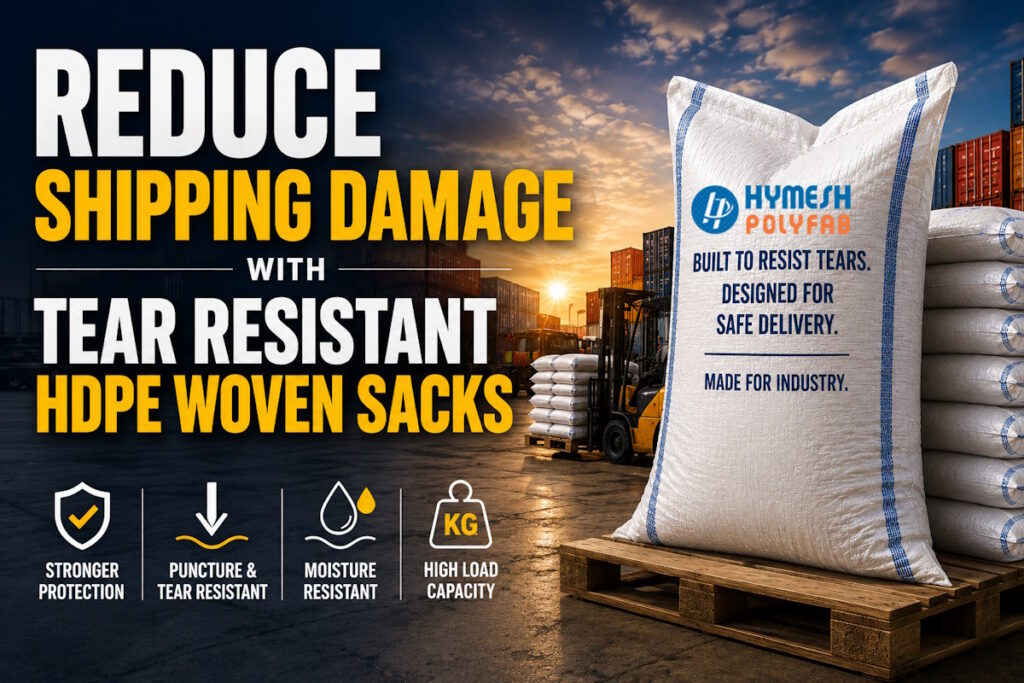
In the world of global logistics and bulk material handling, the strength of your packaging is often the only thing standing between a successful delivery and a costly insurance claim.
For industries dealing with cement, fertilizers, grains, or chemicals, the integrity of the container is paramount.
When a bag fails during transit, the resulting product loss, environmental contamination, and labor costs for cleanup can quickly eclipse the initial savings of choosing cheaper, low-quality packaging materials.
Identifying the right specifications for tear resistant HDPE woven sacks is not just a procurement task; it is a critical risk management strategy for any business involved in high-volume shipping.
Many procurement managers struggle with the balance between cost efficiency and physical durability. The assumption that all woven bags are created equal often leads to significant breakage rates during ship loading, rail transport, or warehouse stacking. By understanding the underlying polymer science and the technical construction of HDPE woven fabric, industrial buyers can make informed decisions that drastically reduce shipping damage. This article provides a comprehensive look at how high-quality woven packaging functions under stress and what factors you should prioritize when sourcing materials for demanding industrial environments.
Want to prevent costly transit losses before they happen?
The Financial and Operational Impact of Packaging Failure
Shipping damage is rarely limited to the cost of the lost product alone. When bulk packaging material fails, it triggers a chain reaction of operational inefficiencies. In a port environment, a single ruptured bag can halt loading operations, leading to expensive demurrage charges. For exporters, damaged goods arriving at an international destination can result in rejected shipments, strained buyer relationships, and the logistical nightmare of arranging replacements. These hidden costs frequently outweigh the marginal price difference between standard bags and premium tear resistant HDPE woven sacks.
Addressing the Root Causes of Material Breach
Most packaging failures occur at points of high stress, such as the seams, or due to punctures from handling equipment like forklifts and hooks. Standard bags may have the tensile strength to hold weight while stationary, but they lack the impact resistance required for the dynamic forces of movement. This is where the distinction between basic woven material and high-tenacity HDPE becomes vital. Choosing a fabric that can absorb energy without propagating a tear is the primary defense against catastrophic bag failure during the rigors of long-haul logistics.
Total Cost of Ownership in Bulk Packaging
When evaluating your packaging budget, it is helpful to look at the total cost of ownership rather than the price per unit. A cheaper bag with a 3 percent breakage rate is significantly more expensive than a high-quality HDPE sack with a 0.1 percent breakage rate when you factor in the value of the lost contents and the labor required to handle spills. High-quality hdpe woven fabric ensures that your product reaches the end-user in the same condition it left the factory, protecting your brand reputation and your bottom line.
Material Science: Why Tear Resistance Matters
The core performance of industrial sacks is determined by the polymer used and the extrusion process. High-Density Polyethylene (HDPE) is favored in specific industrial contexts because of its unique molecular structure. Unlike other polymers, HDPE offers a high strength-to-density ratio, which translates to excellent puncture resistance and the ability to withstand rough handling without tearing. This molecular toughness is what defines tear resistant HDPE woven sacks and makes them suitable for heavy-duty applications.
HDPE vs PP Woven Fabric Durability
While Polypropylene (PP) is widely used for many packaging needs due to its stiffness and lower cost, HDPE provides distinct advantages in certain shipping environments. One of the most critical areas of HDPE vs PP woven fabric durability is environmental resilience. HDPE tends to perform better in cold storage or winter shipping conditions, where PP can become brittle and prone to cracking upon impact. If your supply chain involves fluctuating temperatures or high-impact transitions, HDPE woven fabric often provides the necessary flexibility to prevent tears.
Tensile Strength and Elongation Properties
Tear resistance is a combination of tensile strength and the material’s ability to elongate slightly under pressure. A fabric that is too rigid will snap when dropped, while a fabric with the right balance of elongation will stretch and absorb the energy of the fall. High-quality HDPE sacks are engineered to have specific elongation properties that allow the weave to tighten and hold firm even when the bag is subjected to the sudden pressure of being stacked at the bottom of a heavy pallet.
The Role of Molecular Orientation
During the manufacturing process at facilities like Hymesh Polyfab, the HDPE tapes are stretched under controlled heat to align the polymer chains. This process, known as orientation, significantly increases the strength of the tape. When these high-strength tapes are woven into a fabric, they create a grid-like structure that resists the propagation of small snags. If a small puncture does occur, the oriented tapes work to keep the hole from expanding, which is a hallmark of true tear resistant HDPE woven sacks.
Technical Specifications That Dictate Performance
For a procurement officer, the technical data sheet is the most important tool in ensuring quality. Relying solely on the manufacturer’s claims is risky; instead, you must look at specific metrics that correlate with real-world durability. The performance of woven packaging is a result of three main factors: the weight of the fabric, the density of the weave, and the quality of the raw material used during extrusion.
Determining the Correct GSM for Your Load
Grams per Square Meter (GSM) is the standard measure of fabric weight and a primary indicator of strength. However, more weight does not always mean better performance if the weave is loose. For heavy industrial goods like minerals or chemicals, a higher GSM is usually required to provide the necessary barrier and puncture resistance. Selecting the right GSM involves calculating the maximum load weight and the anticipated stacking height in the warehouse. Using a fabric with insufficient GSM is one of the most common mistakes leading to shipping damage.
Understanding Mesh Count and Denier
The mesh count refers to the number of tapes per inch in both the warp and weft directions. A tighter mesh generally provides better dimensional stability and prevents the contents from sifting through the fabric. Complementary to this is the Denier, which measures the thickness of the individual tapes. In high-performance tear resistant HDPE woven sacks, a balance between a high Denier and an optimized mesh count ensures that the fabric can support the weight of the product while resisting external abrasions.
Lamination and Moisture Protection
In many cases, raw woven fabric is not enough. Adding a layer of LDPE or HDPE lamination can significantly increase the tear strength and provide a moisture barrier. Lamination fills the gaps in the weave, creating a monolithic structure that is much harder to puncture. For products that are hygroscopic or sensitive to environmental moisture, laminated hdpe woven fabric is an essential specification to prevent both physical damage and product degradation.
Not sure which GSM, mesh count, or lamination is right for your product?
How HDPE Woven Fabric Resists Real-World Stress Factors
Industrial bags are subjected to various stresses that a laboratory test might not fully replicate. During sea transit, bags at the bottom of a container must bear the static load of several tons while experiencing the dynamic vibrations of the vessel. Tear resistant HDPE woven sacks are specifically designed to manage these multi-axial stresses. The inherent flexibility of the HDPE polymer allows the bag to “breathe” and shift slightly without the tapes snapping under the pressure.
Puncture Resistance and Hook Handling
In many global ports, manual handling with hooks is still common, even if it is officially discouraged. A standard bag will split wide open if snagged by a hook. However, the cross-weave pattern of high-tenacity hdpe woven fabric is designed to localize damage. While no bag is entirely immune to sharp metal hooks, tear-resistant varieties prevent the small hole from turning into a massive tear that empties the entire contents of the bag. This resilience is a critical safety factor in busy logistics hubs.
UV Stability and Outdoor Storage
Many bulk packaging materials are stored outdoors at some point in the supply chain. UV radiation from sunlight can quickly degrade untreated polymers, making them brittle and easy to tear. High-quality manufacturers like Hymesh Polyfab incorporate UV stabilizers into the HDPE mix during extrusion. This ensures that the tear resistant HDPE woven sacks maintain their structural integrity even after weeks of exposure on a construction site or a loading dock, preventing “sun-rot” failures during final handling.
Sourcing and Quality Verification for Industrial Buyers
When sourcing bulk packaging material, the reliability of the manufacturer is as important as the specification of the bag. Inconsistent production leads to “weak links” in your supply chain, where one sub-standard bag can cause a spill that damages an entire pallet of goods. Professional buyers should look for manufacturers that maintain strict control over the entire production process, from polymer granules to the finished sack.
Factory-Direct Quality Checks
Before finalizing a bulk order, it is essential to understand the manufacturer’s quality control protocols. High-quality producers of tear resistant HDPE woven sacks perform regular drop tests, where filled bags are dropped from specific heights to simulate warehouse accidents. They also conduct tensile testing on the individual tapes and the finished fabric to ensure they meet the promised specifications. Requesting these test reports is a vital step in the procurement process.
Seam Strength and Stitching Quality
The body of the bag might be tear-resistant, but if the stitching is weak, the bag will fail at the bottom or top closure. For heavy-duty applications, double-needle stitching or heat-sealed liners are often used to reinforce these critical points. Buyers should inspect the stitch density and the type of thread used, as these factors are just as important as the hdpe woven fabric itself in preventing shipping damage.
Evaluating Consistency in Export Orders
For international trade, consistency is the hallmark of quality. When you order ten thousand bags, the last bag must be as strong as the first. Variations in tape thickness or weaving tension can create hidden weak spots. Partnering with an established manufacturer like Hymesh Polyfab ensures that the industrial-grade standards are maintained throughout the entire production run, providing peace of mind for high-stakes export logistics.
Optimizing Your Bulk Procurement Strategy
The decision to invest in tear resistant HDPE woven sacks is a decision to prioritize the long-term health of your supply chain. By selecting the correct polymer, optimizing the GSM, and ensuring proper UV stabilization, you can significantly reduce the incidence of shipping damage. This proactive approach to packaging not only saves money but also enhances operational safety and customer satisfaction.
As you evaluate your current packaging, consider the specific environmental and handling stresses your products face. Whether it is the cold temperatures of northern shipping routes or the rough handling of local distribution, there is a technical specification of hdpe woven fabric that can meet the challenge. Moving away from generic packaging and toward application-specific, high-performance woven materials is the most effective way to secure your cargo for the journey ahead.
Ready to reduce shipping damage and product loss with stronger industrial packaging?