
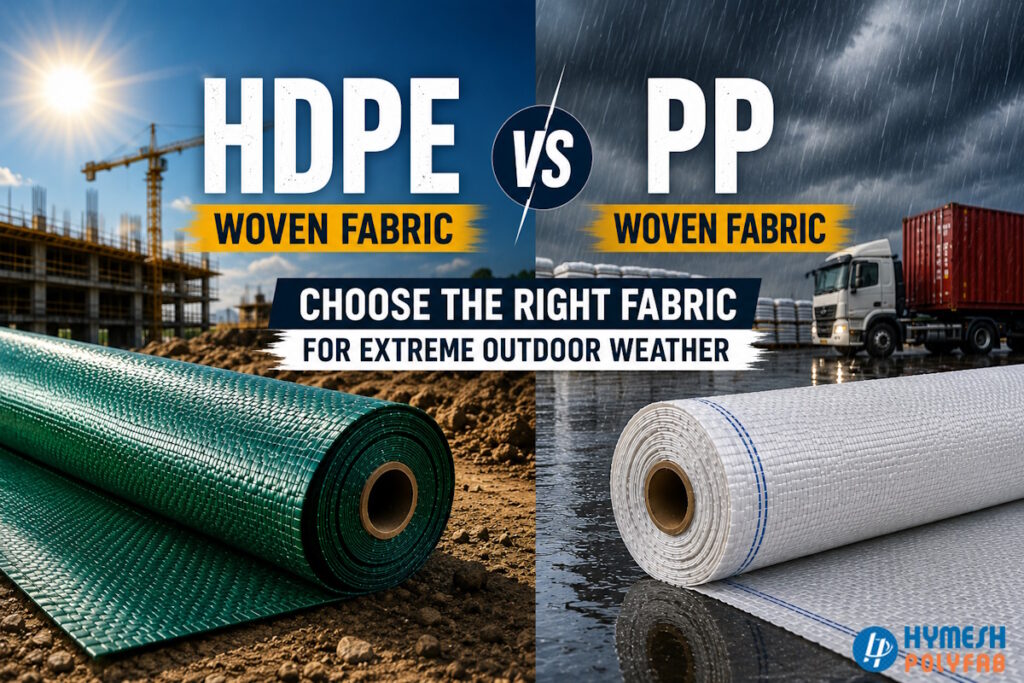
Choosing the right woven fabric for outdoor use is not always easy.
When the fabric has to face hot sun, heavy rain, strong wind, dust, moisture, and rough handling, the choice becomes even more important.
Two common options are HDPE woven fabric and PP woven fabric.
Both are strong, light in weight, and useful for many outdoor jobs. But they do not perform the same in every condition.
If you are comparing hdpe vs pp woven fabric, the main question is simple: which one will last longer in your weather and usage conditions? This is where HDPE vs PP woven fabric durability becomes very important.
HDPE stands for High Density Polyethylene. PP stands for Polypropylene. Both are plastic-based materials used to make woven fabric, sacks, tarpaulins, ground covers, shade nets, liners, packaging fabric, and many other outdoor products.
HDPE woven fabric is known for strong moisture resistance, weather durability, and better outdoor performance. PP woven fabric is popular for its strength, low weight, flexibility, and affordable cost. Both materials are widely used across agriculture, construction, transportation, industrial packaging, and storage applications.
In this article, we will explain the difference between hdpe vs pp woven fabric in simple English. We will also compare pp vs pe fabric, discuss where each material works best, and help you choose the right fabric for extreme outdoor weather.
Need help choosing the right woven fabric for extreme weather?
What Is HDPE Woven Fabric?
HDPE woven fabric is made from high density polyethylene tapes or yarns woven together into a strong fabric sheet. The material is widely used in outdoor applications because it performs well in tough weather conditions.
This fabric is commonly used for:
- Agricultural covers
- Tarpaulins
- Pond liners
- Construction site covers
- Truck covers
- Shade nets
- Ground covers
- Outdoor storage sheets
- Geotextile applications
One of the biggest advantages of hdpe woven fabric is its resistance to moisture and outdoor exposure. It can handle rain, humidity, and harsh sunlight better than many ordinary fabrics.
What Is PP Woven Fabric?
PP woven fabric is made using polypropylene tapes woven together into a durable sheet. It is one of the most common woven materials used in industrial packaging and storage.
Common applications include:
- Fertilizer bags
- Cement bags
- Sand bags
- Grain packaging
- Bulk bags
- Temporary outdoor covers
- Construction packaging
- Shopping bags
PP woven fabric is lightweight, strong, and cost-effective. It also offers good chemical resistance, making it suitable for agriculture and industrial use.
However, when comparing HDPE vs PP woven fabric durability, PP fabric may require proper UV treatment for long-term outdoor exposure. Without UV stabilization, long exposure to direct sunlight can reduce its strength over time.
HDPE vs PP Woven Fabric Durability
Durability is one of the most important factors when choosing outdoor woven fabric. Extreme weather conditions can quickly damage low-quality materials.
When comparing HDPE vs PP woven fabric durability, you should consider:
- UV resistance
- Rain and moisture exposure
- Wind resistance
- Tear strength
- Temperature performance
- Chemical exposure
- Service life
- Maintenance requirements
In many outdoor applications, HDPE woven fabric performs better for long-term exposure because of its strong weather resistance and moisture protection. PP woven fabric is still highly useful, but it is often preferred for packaging and medium-term outdoor use.
UV Resistance and Sunlight Protection
Direct sunlight is one of the biggest causes of fabric damage. UV rays slowly weaken plastic-based fabrics and reduce their life.
In the comparison of hdpe vs pp woven fabric, HDPE usually performs better in areas with strong sunlight, especially when UV stabilized. HDPE woven fabric is widely used for long-term outdoor covers because it handles UV exposure more effectively.
PP woven fabric can also be UV treated and used outdoors successfully. However, untreated PP fabric may become brittle faster under constant sunlight.
If your fabric will remain outdoors for months or years, UV protection should always be a top priority.
Rain and Moisture Resistance
Outdoor fabrics often face heavy rain, humidity, and water exposure. Moisture resistance is essential for protecting goods, machinery, crops, or construction materials.
HDPE woven fabric offers excellent moisture resistance and is widely used in waterproof outdoor covers. It is suitable for areas with frequent rain or wet conditions.
PP woven fabric also resists water to some extent, but many woven PP fabrics need lamination or coating for complete waterproof performance.
For outdoor weather protection:
- Choose laminated HDPE woven fabric for long-term rain protection
- Choose laminated PP woven fabric for medium-term outdoor use
- Choose unlaminated fabric only when water drainage is required
Wind and Tear Strength
Strong wind can damage outdoor fabric if the material is weak or poorly finished. Tear resistance depends on fabric quality, GSM, coating, and edge finishing.
Both pp woven fabric and hdpe woven fabric can offer strong tear resistance when manufactured properly.
For windy environments, check the fabric GSM, weave density, lamination quality, reinforced edges, eyelet strength, stitching quality, and UV treatment.
A high-quality woven fabric with reinforced edges will last longer in harsh outdoor weather.
Temperature Resistance
Extreme outdoor weather often includes both high heat and cold temperatures.
HDPE woven fabric generally performs better in changing weather conditions. It remains durable in moisture-heavy environments and can handle outdoor exposure for longer periods.
PP woven fabric performs well in many applications but may become less flexible in very cold weather if low-quality material is used.
For hot climates, both fabrics should include UV stabilizers for better performance.
Chemical Resistance
Outdoor fabrics may come into contact with:
- Fertilizers
- Pesticides
- Industrial chemicals
- Oils
- Salts
- Cleaning agents
PP woven fabric has excellent chemical resistance, which makes it popular for industrial and agricultural packaging.
HDPE woven fabric also offers strong chemical resistance and is widely used in industrial covers and liners.
If your fabric will face chemical exposure, always confirm chemical compatibility with the supplier.
HDPE vs PP Woven Fabric for Agriculture
Agriculture is one of the biggest industries using woven fabrics. These materials are used for crop protection, storage, shade nets, pond liners, and packaging.
HDPE woven fabric is commonly preferred for:
- Shade nets
- Ground covers
- Pond liners
- Long-term crop covers
- Nursery applications
PP woven fabric is widely used for:
- Grain bags
- Fertilizer sacks
- Packaging applications
- Temporary field covers
For long-term agricultural exposure, HDPE usually offers better outdoor durability.
HDPE vs PP Woven Fabric for Construction
Construction sites require fabrics that can resist dust, sunlight, rain, and rough handling.
HDPE woven fabric is often used for:
- Construction covers
- Debris protection
- Scaffolding covers
- Machinery protection
- Temporary roofing
PP woven fabric is commonly used for:
- Cement bags
- Sand bags
- Packaging materials
- Temporary protective covers
The right choice depends on how long the fabric will stay outdoors.
Cost Comparison
When comparing pp vs pe fabric, cost is a major factor.
PP woven fabric is usually more affordable and widely used for packaging and temporary applications. It offers good strength at a lower cost.
HDPE woven fabric may cost slightly more, especially when UV treated or laminated. However, it often lasts longer in harsh weather, making it more cost-effective over time.
A cheap fabric that fails quickly can increase replacement and maintenance costs. That is why long-term performance should always be considered.
Importance of UV Treatment
Many buyers focus only on material type and forget about UV treatment. This is a major mistake.
For outdoor use, UV stabilization is extremely important. Without UV treatment, woven fabric can weaken quickly under sunlight.
Always ask:
- Is the fabric UV treated?
- How long is it rated for outdoor use?
- Is the coating UV stable?
- What weather conditions is it designed for?
A properly UV treated PP woven fabric can perform much better than poor-quality untreated material.
Not sure whether HDPE or PP woven fabric is right for your application?
Laminated vs Unlaminated Fabric
Both HDPE and PP woven fabrics can be laminated or unlaminated.
Laminated fabric provides:
- Better waterproofing
- Dust resistance
- Improved protection
- Better printing surface
- Longer outdoor life
Unlaminated fabric is suitable for:
- Breathable applications
- Drainage purposes
- Lightweight usage
- Lower-cost applications
For extreme weather conditions, a durable laminated woven fabric is often preferred because it provides stronger waterproofing and better outdoor durability.
GSM and Fabric Strength
GSM means grams per square meter. It shows the weight and thickness of the fabric.
Higher GSM fabrics are generally stronger and more durable for outdoor applications.
For heavy-duty weather conditions, choose higher GSM fabric with proper UV treatment and strong lamination.
Do not compare fabrics only by price. Compare:
- GSM
- UV protection
- Coating quality
- Tear strength
- Weave density
- Outdoor lifespan
Best Choice for Monsoon Weather
Monsoon weather creates problems such as:
- Heavy rain
- Humidity
- Wet ground
- Strong wind
For such conditions, laminated HDPE woven fabric is often the preferred choice because of its superior moisture resistance.
PP woven fabric can also work well if properly laminated and UV stabilized.
Best Choice for Desert Weather
Desert climates expose fabric to:
- Strong sunlight
- Heat
- Dust storms
- Dry winds
HDPE woven fabric is generally more reliable for long-term desert exposure because of its better UV performance.
If using PP woven fabric in desert conditions, always choose UV stabilized material with strong coating.
Best Choice for Cold and Snowy Weather
Cold weather can affect fabric flexibility and strength.
HDPE woven fabric usually performs better in wet and cold environments. It remains durable and moisture resistant for longer periods.
For snowy areas, waterproof laminated HDPE woven fabric is often the safer option.
Common Buyer Mistakes
Many buyers make mistakes while choosing woven fabric for outdoor use.
Common mistakes include:
- Ignoring UV treatment
- Choosing low GSM fabric
- Buying only based on low price
- Ignoring lamination quality
- Choosing packaging-grade fabric for heavy outdoor use
- Ignoring edge reinforcement
- Not checking weather suitability
Always choose fabric according to the actual environment and usage conditions.
How to Choose the Right Fabric
Choose hdpe woven fabric if:
- You need long outdoor life
- The fabric will face strong sunlight
- The area has heavy rain or moisture
- You need strong weather resistance
- The application is long-term
Choose pp woven fabric if:
- You need affordable material
- The application is short or medium-term
- You need lightweight fabric
- The fabric is mainly for packaging
- You are using UV treated PP for outdoor use
Final Thoughts
Choosing between HDPE and PP woven fabric depends on your weather conditions, application type, and expected fabric life.
When comparing HDPE vs PP woven fabric durability, HDPE woven fabric is usually the better option for long-term outdoor exposure, especially in harsh weather conditions. It offers strong moisture resistance, better UV performance, and excellent durability.
PP woven fabric remains a highly useful and cost-effective material for packaging, industrial use, and medium-term outdoor applications. With proper UV treatment and lamination, it can also perform well outdoors.
Instead of focusing only on pp vs pe fabric, buyers should also consider UV treatment, GSM, lamination quality, coating, tear strength, weather conditions, and the expected lifespan of the fabric.
The right combination of these factors will help you select the best woven fabric for your outdoor needs.
Ready to order durable HDPE or PP woven fabric for outdoor use?