
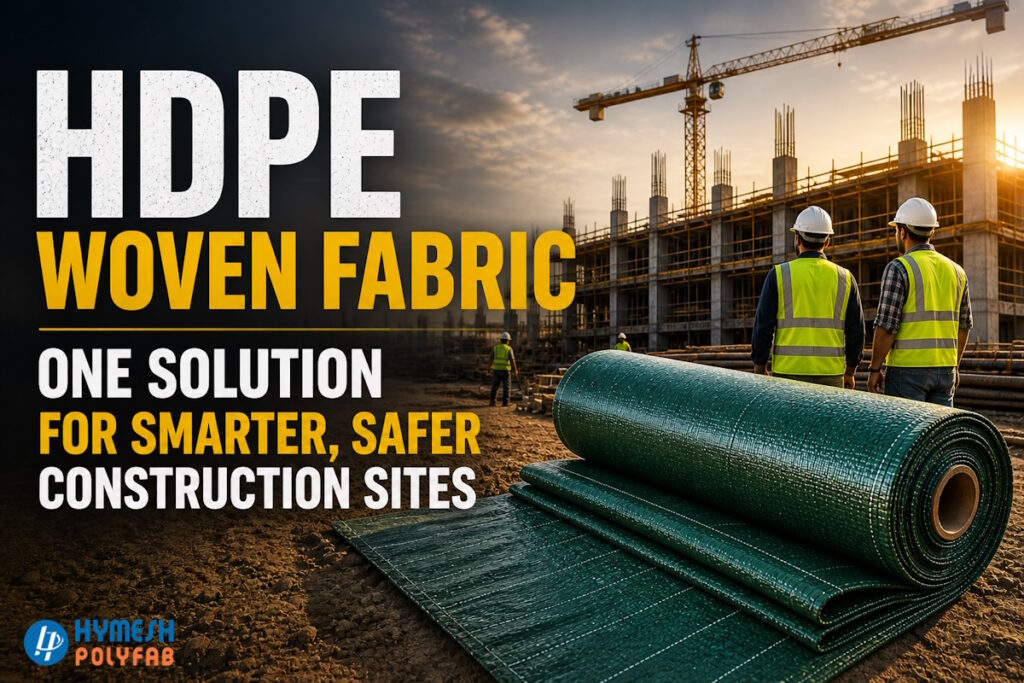
Modern construction sites are high-stakes environments where efficiency, safety, and material protection directly impact the bottom line.
Project managers and contractors are increasingly moving away from flimsy, short-term solutions in favor of high-performance technical textiles.
Among these, the use of HDPE woven fabric in construction has become a cornerstone for site management due to its exceptional tensile strength, resistance to environmental stressors, and cost-effectiveness over large-scale applications.
Why HDPE woven fabric in Construction Is Transforming Modern Job Sites
Selecting the right polymer fabric is not merely a matter of finding a cover, it is about understanding the mechanical properties required for specific site challenges. High-Density Polyethylene (HDPE) provides a superior strength-to-density ratio compared to standard plastics, making it ideal for the rigorous demands of civil engineering and industrial building. Whether it is managing moisture during the concrete curing phase or creating a barrier against wind-borne dust, the versatility of this material allows contractors to solve multiple logistical problems with a single product category.
Struggling to manage dust, debris, or material protection on-site?
1. Site Perimeter Hoarding and Dust Mitigation
Every urban construction project faces the challenge of containing debris and managing dust to comply with local environmental regulations. Traditional metal sheets are heavy and expensive to install, whereas an hdpe fabric roll offers a lightweight yet incredibly strong alternative. These fabrics are used to create perimeter fences that serve as both a visual barrier and a physical shield against the spread of particulate matter.
Improving Air Quality and Public Safety
By installing high-density woven fabric around the site, contractors can significantly reduce the amount of dust that escapes into the surrounding neighborhood. This is particularly important in densely populated areas of India where construction activity is constant. The woven nature of the material allows for controlled wind permeability, which prevents the “sail effect” that often causes solid barriers to collapse during high winds.
Technical Specification for Dust Barriers
For perimeter hoarding, contractors typically look for fabrics with a GSM (Grams per Square Meter) range of 80 to 120. This weight provides enough opacity for privacy while maintaining the flexibility needed for quick installation on scaffolding or temporary poles. Using polyethylene woven fabric in these instances ensures that the barrier does not degrade quickly under intense sunlight, thanks to UV-stabilized resins used during advanced manufacturing processes.
2. Moisture Retention for Concrete Curing
The quality of a concrete structure depends heavily on the curing process. If the water evaporates too quickly from the concrete mix, the resulting slab or pillar may suffer from shrinkage cracks and reduced structural integrity. Contractors use laminated woven fabric as a curing blanket to trap moisture and maintain a consistent temperature during the critical first days of hydration.
The Role of Lamination in Hydration
While unlaminated fabric is breathable, laminated woven fabric features a thin coating of LDPE or PP that makes the material nearly impermeable to water vapor. By laying this fabric over freshly poured concrete, contractors create a micro-environment that prevents the “bleeding” of water. This ensures that the chemical reaction within the concrete reaches its full potential, resulting in a higher compressive strength for the finished structure.
3. Protection of Raw Materials and Inventory
Construction materials such as cement, steel reinforcement bars, and timber are sensitive to environmental exposure. Rain, humidity, and direct sunlight can lead to cement clumping, rust formation, or wood warping. A high-quality hdpe fabric roll is often the primary line of defense for these valuable assets during on-site storage.
Preventing Wastage of Cement and Chemicals
Cement is highly hygroscopic, meaning it absorbs moisture from the air. Using a laminated polyethylene woven fabric to cover cement stockpiles prevents the ingress of humidity. For large-scale industrial projects, having a reliable supply of wide-width fabrics means contractors can cover massive inventories with fewer seams, reducing the risk of water leakage at the joints.
Managing Steel Reinforcement Longevity
Steel bars stored on-site are prone to oxidation when exposed to rain. While some surface rust is manageable, deep corrosion can compromise the bond between the steel and concrete. Heavy-duty woven fabric uses in this context include creating temporary “dry zones” where steel can be stored off the ground and under a waterproof HDPE canopy. This simple procurement decision can save lakhs in material replacement costs and project delays.
Planning bulk material storage and want to prevent costly damage?
4. Ground Stabilization and Soil Separation
In civil engineering, specifically road construction and foundation work, the mixing of different soil layers can lead to structural failure. HDPE woven fabric in construction acts as a stabilizing layer that keeps aggregate materials separate from the subgrade soil while allowing for proper weight distribution.
Enhancing Load-Bearing Capacity
When heavy machinery moves across a site, the pressure can force gravel into soft clay, creating ruts and unstable ground. By placing a high-GSM woven fabric between the soil and the gravel, contractors create a “tensioned membrane” effect. This distributes the weight of the load more evenly across a larger surface area, preventing the sinking of heavy equipment and ensuring a stable base for permanent structures.
Filtration and Drainage Logic
Beyond stabilization, woven fabric uses include filtration. In areas with high groundwater levels, the fabric allows water to pass through while preventing fine soil particles from clogging drainage systems. This is a critical factor in the longevity of retaining walls and basement foundations where hydrostatic pressure must be managed carefully.
5. Scaffold Enclosures and Worker Protection
Vertical construction requires workers to operate at significant heights, often exposed to high winds and varying weather conditions. Scaffolding is frequently wrapped in HDPE woven fabric to create a safer, more controlled work environment. This application is vital for both the safety of the workers and the protection of the surrounding area from falling debris.
Reducing Wind Loads and Thermal Stress
Working on a high-rise scaffold in the middle of summer can be dangerous due to heat exhaustion. Polyethylene woven fabric provides shade for the workers while the weave allows for enough air circulation to prevent the workspace from becoming an oven. Furthermore, by reducing the wind speed on the platform, the fabric makes it easier for workers to handle materials and tools safely.
6. Temporary Roofing and Emergency Weatherproofing
During renovation projects or when a building’s roof is being replaced, the structure is vulnerable to sudden rain. Contractors rely on large-format laminated woven fabric to create temporary roofs. Unlike traditional tarpaulins, which might tear under high tension, high-quality HDPE fabrics are engineered for tear resistance and long-term outdoor exposure.
UV Resistance and Durability
Standard plastics turn brittle and crack when exposed to the intense UV radiation found in India and tropical export markets. The HDPE woven fabric manufactured for construction purposes includes UV stabilizers that extend the life of the temporary roof for several months. This is crucial for projects that span across multiple seasons or experience delays due to monsoon weather.
Choosing the Right Weave Density
For roofing applications, the weave density (often measured in tapes per inch) is critical. A tighter weave combined with a high-micron lamination ensures that the fabric can withstand the pressure of pooled rainwater without leaking. Contractors should look for reinforced edges and heat-sealed seams to ensure the temporary structure remains watertight throughout the project duration.
7. Secondary Containment and Environmental Compliance
Environmental regulations are becoming stricter, and contractors are now responsible for ensuring that runoff from the site does not contaminate local water sources. HDPE woven fabric in construction is used to create silt fences and secondary containment areas for fuels, chemicals, and wash-water from concrete mixers.
Silt Fence Installation
A silt fence is a temporary sediment control device used on construction sites to protect water quality in nearby streams and rivers. The woven fabric acts as a filter, allowing water to flow through while trapping sediment. This prevents the loss of topsoil and ensures the project remains in compliance with environmental protection laws.
Chemical and Fuel Containment
In areas where heavy machinery is refueled, contractors often use a heavy-duty laminated woven fabric as a liner for a containment pit. If a spill occurs, the fabric prevents the fuel from seeping into the ground, allowing for a much easier and more cost-effective cleanup process. This proactive approach to environmental management is a hallmark of a high-quality contracting firm.
Procurement Guidance: Selecting the Right Specification
Sourcing fabric for a construction site involves more than just looking at the price per kilogram. To ensure the safety and longevity of the application, buyers must evaluate several technical factors before finalizing a bulk order with a manufacturer like Hymesh Polyfab.
Evaluating GSM and Tensile Strength
The GSM of the fabric is the primary indicator of its weight and durability. For light-duty dust covers, 80 to 100 GSM may suffice. However, for ground stabilization or heavy-duty roofing, 150 to 250 GSM is often required. Tensile strength, which is the amount of force the fabric can withstand before breaking, should be verified in both the warp (lengthwise) and weft (crosswise) directions.
Lamination Quality and Adhesion
For applications requiring waterproofing, the quality of the lamination is paramount. Poorly laminated fabric will peel or “delaminate” when exposed to heat or friction. Buyers should check for the “lamination adhesion” strength to ensure the coating will not separate from the woven base material during rough handling on the construction site.
Width and Roll Length Customization
To reduce waste and labor costs, contractors should procure fabrics in widths that match their specific site needs. Many manufacturers offer widths ranging from 1 meter to over 4 meters. By choosing the correct width, you reduce the number of overlaps and joints, which are common failure points in moisture protection and ground stabilization.
Ready to improve durability, safety, and efficiency on your construction site?