
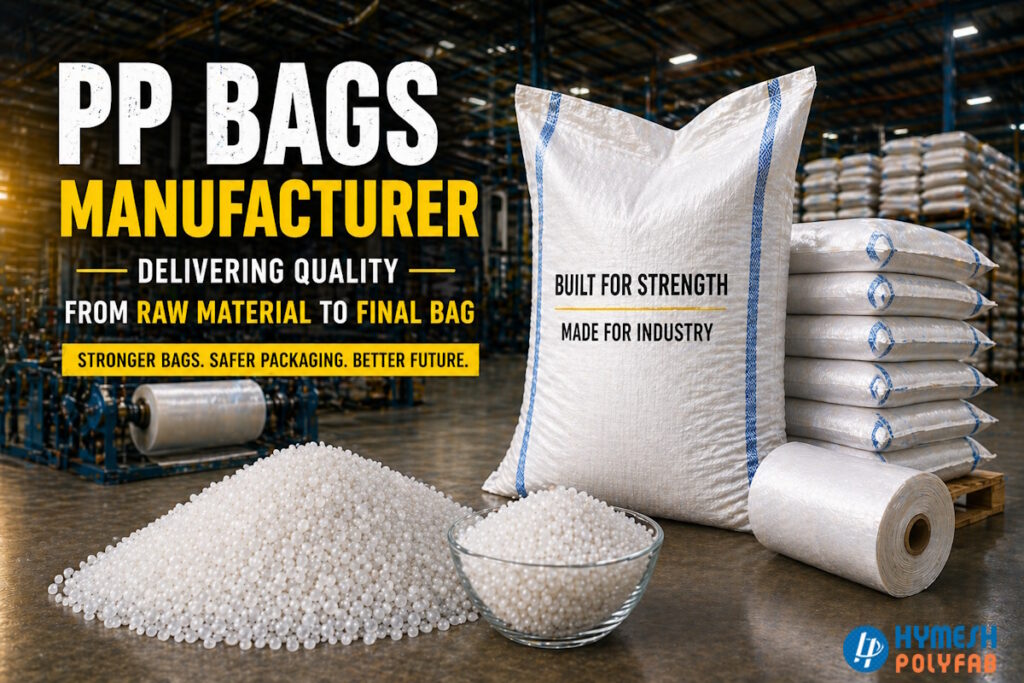
We live in the high-stakes world of industrial logistics, and the integrity of packaging is the only thing standing between a successful delivery and a total loss of inventory.
For procurement managers and logistics operators, choosing a PP bags manufacturer is not merely a matter of comparing price per unit.
It is an evaluation of an entire manufacturing ecosystem that must ensure consistency across thousands of meters of fabric.
When a single bag fails due to poor tensile strength or inadequate lamination, the resulting spill leads to product wastage, environmental compliance issues, and significant financial setbacks.
High-quality woven polypropylene bags are the result of a meticulously controlled multi-stage process. From the initial selection of polymer resins to the precision of the circular looms and the final stitching, every step requires technical oversight. Understanding the processes allows buyers to move beyond superficial specifications and look at the underlying factors that determine the load-bearing capacity and shelf-life of the packaging. A professional PP bags manufacturer focuses on maintaining these technical thresholds to provide industrial-grade reliability for sectors ranging from agriculture to chemical manufacturing.
Looking for export-grade woven polypropylene bags with consistent quality?
The Critical Role of Raw Material Selection in Bag Integrity
The performance of any woven bag begins with the chemical composition of the raw materials used in the extrusion process. A reputable pp bags manufacturer prioritizes the use of high-quality Polypropylene (PP) homopolymer resins. The melt flow index (MFI) of the resin must be carefully selected to ensure that the resulting tapes possess the necessary elasticity and strength. If the resin quality is inconsistent, the tapes will be prone to snapping during the weaving process, leading to structural weak points in the finished bag.
Virgin Resin vs. Recycled Content
One of the most common procurement mistakes is overlooking the ratio of virgin resin to recycled material. While recycled PP can reduce costs, it significantly impacts the tensile strength and UV resistance of the fabric. For heavy-duty industrial applications, such as cement or fertilizer packaging, a quality pp bags supplier will typically recommend high-purity virgin resin. This ensures that the polymer chains are intact, providing the maximum possible resistance to elongation and tearing under pressure.
Masterbatch and UV Stabilizers
Industrial bags are often stored in open yards or transported in uncovered trucks, exposing them to intense sunlight. Without the addition of UV stabilizers during the raw material mixing phase, woven polypropylene bags can become brittle and disintegrate within weeks. A technical manufacturer integrates specialized UV masterbatches to extend the outdoor life of the fabric. Additionally, calcium carbonate (filler) is used in controlled proportions to provide the necessary stiffness and anti-skidding properties without compromising the fabric’s overall strength.
Precision Tape Extrusion: The Foundation of Tensile Strength
The transition from resin granules to flat tapes is perhaps the most technical phase of production. The extrusion line melts the PP mix and pushes it through a T-die to form a thin film. This film is then slit into narrow tapes, which are stretched and annealed. As a PP woven bags manufacturer, maintaining uniform thickness and width at this stage is non-negotiable. Any variation in the tape dimensions will result in an uneven weave, creating thin spots where the bag is most likely to fail under load.
Denier Control and Orientation
Denier is the measurement of the weight of 9,000 meters of the tape. It is the primary indicator of the tape’s thickness and, by extension, the bag’s durability. During extrusion, the tapes undergo a process called orientation, where they are stretched under heat to align the polymer molecules. This alignment is what gives woven polypropylene bags their legendary strength. A high-quality extrusion process ensures that the elongation percentage remains within strict limits, typically between 15% and 25%, depending on the final application.
Annealing for Thermal Stability
Annealing is the process of heating and then cooling the tapes to lock in their molecular structure. This prevents the tapes from shrinking or becoming distorted during subsequent processes like lamination or printing. For a pp woven sack manufacturer, precise temperature control in the annealing ovens is critical. If the tapes are not properly stabilized, the fabric may warp when exposed to the heat of the lamination melt, leading to dimensional inaccuracies in the final bag size.
Need help choosing the right GSM, size, and strength for your bags?
Advanced Circular Weaving for Consistent Fabric Density
Once the tapes are wound onto bobbins, they are moved to circular looms where the weaving takes place. This is where the individual tapes are converted into a tubular fabric. The quality of the weave is defined by the mesh count, which refers to the number of tapes per inch in both the warp (vertical) and weft (horizontal) directions. A consistent mesh count ensures that the load is distributed evenly across the entire surface of the bag.
Managing Tension and Weave Defects
Modern circular looms utilize sophisticated tensioning systems to ensure that every tape is woven at the same pressure. If the tension is too loose, the fabric will have gaps, allowing fine powders like cement or flour to leak out. If it is too tight, the tapes may snap. A quality PP bags supplier employs operators who constantly monitor the looms for defects such as missed tapes or gapping, which can compromise the integrity of the entire batch. Unlike HDPE woven fabric, which is often used for different applications like tarpaulins, PP fabric is specifically optimized for the rigidity required in bag form.
Width Consistency and Flatness
For automated filling lines, the width of the tubular fabric must be perfectly consistent. Variations in width can cause the bags to jam in the filling machinery, leading to operational downtime. A professional pp bags manufacturer uses specialized monitoring equipment to ensure the tube diameter remains within a tolerance of plus or minus a few millimeters. This level of precision is what separates export-quality fabric from standard domestic grade materials.
Lamination and Moisture Protection Standards
Many industrial products, such as fertilizers, sugar, and fine chemicals, are highly sensitive to moisture. To protect these goods, the woven fabric must be laminated with a thin layer of molten polypropylene or polyethylene (PE). This lamination acts as a moisture barrier and provides a smooth surface for high-quality printing. As a pp woven sack manufacturer, the lamination process is a critical quality checkpoint.
Adhesion Quality and Micron Thickness
The primary challenge in lamination is ensuring a perfect bond between the coating and the woven fabric. If the temperature of the lamination melt is too low, the coating will peel off (delaminate). If it is too high, it can weaken the underlying woven tapes. We measure lamination quality by the micron thickness of the coating and the peel strength of the bond. For export-grade woven polypropylene bags, the lamination must be uniform across the entire surface to prevent any moisture ingress during sea transit.
BOPP Lamination for Premium Branding
For consumer-facing industrial products, Biaxially Oriented Polypropylene (BOPP) film is often laminated onto the woven fabric. This allows for multi-color, high-definition photographic printing. A pp bags manufacturer specializing in BOPP bags must ensure that the film is perfectly aligned with the woven tube. This requires advanced registration control systems to prevent the print from shifting during the conversion process, ensuring that the final product reflects the quality of the brand inside.
Conversion, Stitching, and Final Quality Testing
The final stage of production is the conversion of the woven tube into individual bags. This involves cutting, folding, and stitching. While it may seem straightforward, this is where many structural failures occur. The strength of the bottom stitch is just as important as the strength of the fabric itself. A PP bags manufacturer must use high-tenacity sewing thread and precise stitch lengths to ensure the bag can withstand the drop test.
The Importance of Stitch Density
If the stitches are too close together, they can act like a perforation, causing the fabric to tear along the seam. If they are too far apart, the product can leak through the needle holes. A PP woven bags manufacturer follows standardized stitch-per-inch (SPI) counts based on the weight of the material being packed. For heavy loads, a double-fold bottom stitch or a herringbone stitch pattern may be used to provide additional reinforcement.
Rigorous Testing Protocols
Before any batch leaves the factory, it must undergo several tests:
- Tensile Strength Test: Measuring the force required to break the fabric and the seams.
- Drop Test: Filling the bag to its rated capacity and dropping it from a specific height to ensure it does not burst.
- GSM Verification: Weighing a fixed area of the fabric to ensure it meets the Grams per Square Meter specification.
- UV Resistance Testing: Using accelerated weathering chambers to simulate long-term sun exposure.
Procurement Guidance: Selecting the Right Partner
Choosing a pp bags manufacturer requires looking beyond the initial quote. Industrial buyers should evaluate the manufacturer’s ability to maintain consistency over long-term supply contracts. A factory-direct relationship with an experienced pp bags manufacturer provides transparency into the raw material sourcing and the technical standards maintained on the production floor. When sourcing woven polypropylene bags, always request a technical data sheet (TDS) that outlines the tensile strength, UV stabilization, and GSM of the fabric.
Avoid the pitfall of under-speccing a bag to save costs. A bag that is 10 GSM lighter might be cheaper today, but if it leads to a 5% breakage rate during export, the total cost of ownership skyrockets. A quality PP bags supplier will help you find the sweet spot between material weight and safety margins. Whether you are dealing with HDPE woven fabric for industrial liners or PP sacks for grain, the focus should always be on the structural integrity of the weave and the reliability of the manufacturing process.
Ready to source durable, high-performance PP woven bags at competitive prices?