
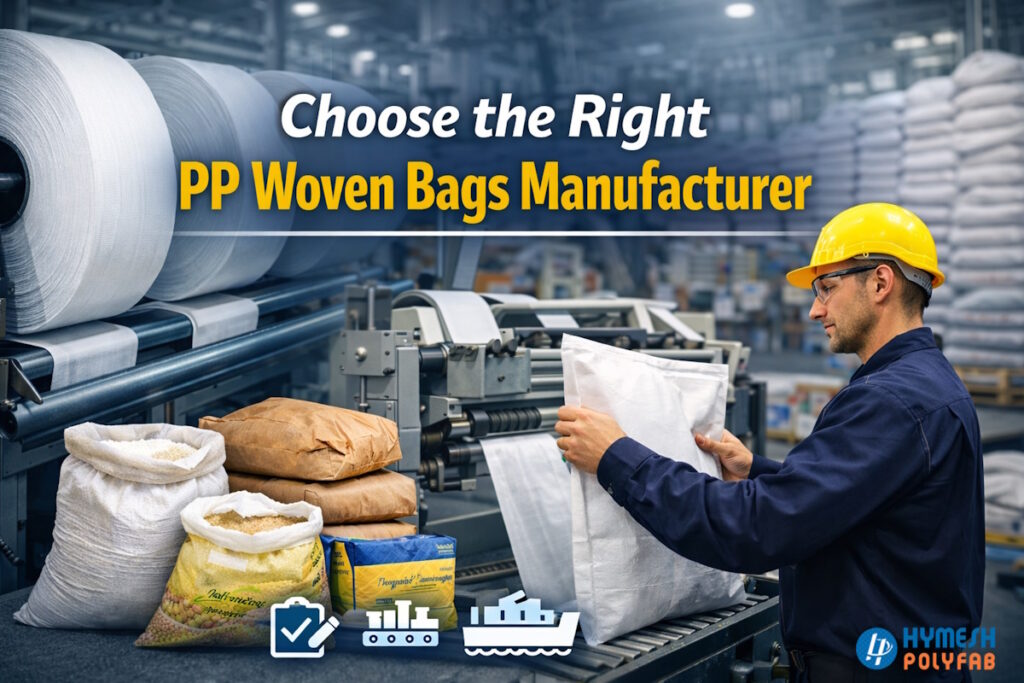
In the world of high-volume industrial packaging, the transition from small-batch procurement to large-scale supply chain management introduces a unique set of challenges.
When your operations require hundreds of thousands of units, the stakes for material reliability, dimensional accuracy, and supply chain consistency rise exponentially.
A minor fluctuation in the Grams per Square Meter (GSM) or a slight inconsistency in the weave density of a pp woven fabric might go unnoticed in a small order, but in a large-scale operation, it can lead to catastrophic bag failures, significant product loss, and operational downtime.
Selecting the right pp woven bags manufacturer is not merely about finding the lowest price per unit; it is about identifying a partner capable of maintaining rigorous technical standards across massive production runs. For industries ranging from cement and fertilizers to grain exports and chemical processing, the bag is more than just a container. It is a protective barrier that must withstand the rigors of automated filling, forklift handling, sea transit, and varied environmental exposures. This article provides a technical framework for vetting manufacturers to ensure they can meet the demands of large-scale industrial requirements.
Planning a large-scale packaging requirement?
1. Consistency in Resin Quality and Extrusion Technology
The foundation of any high-performance woven bag is the quality of the polypropylene resin and the precision of the extrusion process. For large-scale operations, you must verify that the manufacturer uses virgin or high-grade recycled resins that meet specific tensile strength requirements. Inconsistencies at the extrusion stage lead to variations in tape width and thickness, which directly impact the overall strength of the pp woven fabric. If the tapes are uneven, the weave will have weak points that are prone to tearing under pressure.
Analyzing Tape Tensile Strength and Elongation
A reputable manufacturer should provide detailed data on the denier and tenacity of the tapes used in their fabric. In large-scale filling operations, particularly with high-speed automated packers, the bags are subjected to sudden impact forces. Tapes with inadequate elongation properties will snap rather than stretch slightly to absorb the energy. Buyers should inquire about the manufacturer’s internal testing for tape strength and their ability to maintain a consistent denier across millions of meters of extruded material.
The Role of UV Stabilization in Bulk Packaging
For operations involving outdoor storage or long-distance shipping, UV stabilization is non-negotiable. Large-scale buyers must verify the percentage of UV additives incorporated during the extrusion process. Without proper stabilization, polypropylene degrades rapidly under sunlight, causing the bulk packaging material to become brittle and fail. A technical vetting process should include a review of the UV masterbatch quality and the manufacturer’s ability to guarantee a specific number of kilolangleys (kLY) of UV resistance based on the destination climate.
2. Precision in Woven Fabric Density and GSM Management
GSM is the most critical metric for determining the cost and performance of a woven bag. However, many buyers fall into the trap of only looking at the average GSM. In large-scale operations, the variance in GSM is what matters most. If a manufacturer’s process allows for a +/- 10% variance, you may receive bags that are dangerously thin in certain areas. A high-quality pp woven bags manufacturer utilizes advanced circular looms that maintain a tight weave density with minimal variance, ensuring that every bag in a 50,000-unit lot performs identically to the first.
Weave Count and Mesh Specifications
The mesh count, or the number of tapes per inch in both the warp and weft directions, determines the structural integrity of the fabric. For heavy-duty applications like cement or minerals, a higher mesh count is required to prevent material leakage and provide the necessary burst strength. During the vetting process, request a specification sheet that details the mesh count and compare it against the required load-bearing capacity of your product.
Impact of Weaving Defects on Automated Systems
In automated filling lines, even minor weaving defects like “missed tapes” or “loose ends” can cause machine jams and production delays. When vetting a supplier for bulk packaging material, inspect their facility for automated optical inspection systems that detect and flag weaving flaws in real-time. Consistency in the fabric surface is also vital for the application of lamination and printing, as any irregularity in the weave can lead to poor adhesion or distorted branding.
Unsure if your current supplier meets these GSM and weave standards?
3. Lamination Integrity and Moisture Protection Capabilities
For many industrial products, moisture is the primary enemy. Laminated woven bags provide an essential barrier, but the quality of that lamination is often where manufacturers differ. A large-scale pp woven bag manufacturer in ahmedabad must demonstrate mastery over the extrusion coating process. The bond between the base pp woven fabric and the lamination layer must be strong enough to resist peeling, even when the bag is subjected to heat, friction, and rough handling during transit.
Micron Consistency and Barrier Performance
The thickness of the lamination layer, usually measured in microns, must be uniform across the entire surface of the bag. If the lamination is too thin in certain spots, moisture can seep through, potentially ruining products like sugar, flour, or hygroscopic chemicals. During your vetting process, ask for the lamination thickness specifications and how the manufacturer monitors the “bonding strength” of the coating. A superior manufacturer will often use high-quality LDPE or PP coating materials to ensure a flexible yet durable moisture barrier.
BOPP Film Integration for Premium Packaging
For brands that require high-impact graphics alongside industrial strength, Biaxially Oriented Polypropylene (BOPP) lamination is the standard. This involves reverse-printing a film and then laminating it to the woven fabric. This process requires precise alignment and specialized machinery. If your large-scale operation involves retail-facing products, vetting the manufacturer’s BOPP lamination line is critical to ensuring your branding remains intact and vibrant throughout the supply chain.
4. Scale of Production and Supply Chain Reliability
A manufacturer might produce an excellent sample, but can they deliver 500,000 bags every month without fail? For large-scale operations, production capacity is a form of risk management. Vetting a pp woven bags manufacturer requires a deep dive into their machine inventory, power backup systems, and raw material sourcing stability. You need to ensure that your supplier is not operating at 100% capacity on a single shift, as this leaves no room for scaling up or absorbing production delays caused by unforeseen events.
Lead Time Accuracy and Buffer Stocking
Reliability in delivery schedules is paramount. In large-scale logistics, a delay of three days can lead to a backlog of containers and significant demurrage charges. When vetting, ask for historical data on lead time accuracy. Does the manufacturer have the warehouse space to maintain a buffer stock of your specific bags? A reliable HDPE Woven Fabrics Supplier or PP bag manufacturer should have a structured production planning and control (PPC) department that manages timelines across multiple large-scale accounts.
Export-Grade Documentation and Compliance
For companies involved in international trade, the manufacturer’s familiarity with export documentation is essential. This includes Certificate of Analysis (COA), weight bridge reports, and compliance with international shipping standards. A manufacturer with an established export track record is more likely to understand the nuances of palletization, container loading, and the durability required for 30 to 45 days of sea transit.
5. Quality Control Infrastructure and Testing Protocols
The final factor in vetting a pp woven bags manufacturer is their commitment to quality control (QC). A manufacturer who claims high quality without a dedicated, in-house laboratory is a risk for large-scale buyers. The QC process should be integrated into every stage of production, from the arrival of the resin to the final stitching of the bag. For large orders, statistical process control (SPC) should be used to monitor trends and catch potential issues before they affect a large portion of the batch.
Standardized Testing for Industrial Performance
A robust QC lab should perform several key tests regularly. These include tensile testing for fabric and seams, drop tests to simulate real-world handling, and air permeability tests for bags used in powdery substances. If you are sourcing from an HDPE Woven Fabrics Supplier, they should also provide data on burst strength and puncture resistance. Ask to see the manufacturer’s lab logs and the frequency of their calibration cycles for testing equipment.
Seam Strength and Stitching Integrity
The seam is often the weakest point of a woven bag. For large-scale operations, the choice of stitching thread and the type of stitch (e.g., chain stitch or herakles stitch) must be optimized for the weight of the contents. Vetting should include an inspection of the finishing department. Are the sewing machines maintained? Is the thread quality consistent? Poor stitching can lead to “sifting” (material leaking through needle holes) or complete seam failure under load.
Key Procurement Considerations for Woven Packaging
Vetting a manufacturer for large-scale operations is a multi-layered process that moves beyond price comparisons into the realm of technical partnership. The goal is to find a supplier whose internal culture prioritizes consistency, transparency, and technical excellence. By focusing on resin quality, GSM variance, lamination precision, production scalability, and rigorous QC, procurement managers can significantly reduce the risk of field failures and supply chain disruptions.
Remember that the “cheapest” bag often becomes the most expensive when you factor in the costs of product loss, customer dissatisfaction, and shipping delays. A high-quality pp woven fabric solution is an investment in the safety and efficiency of your entire operation. As you evaluate potential partners, prioritize those who are willing to discuss the technical nuances of your application and provide data-backed guarantees of performance.
Ready to eliminate packaging failures and scale with confidence?