
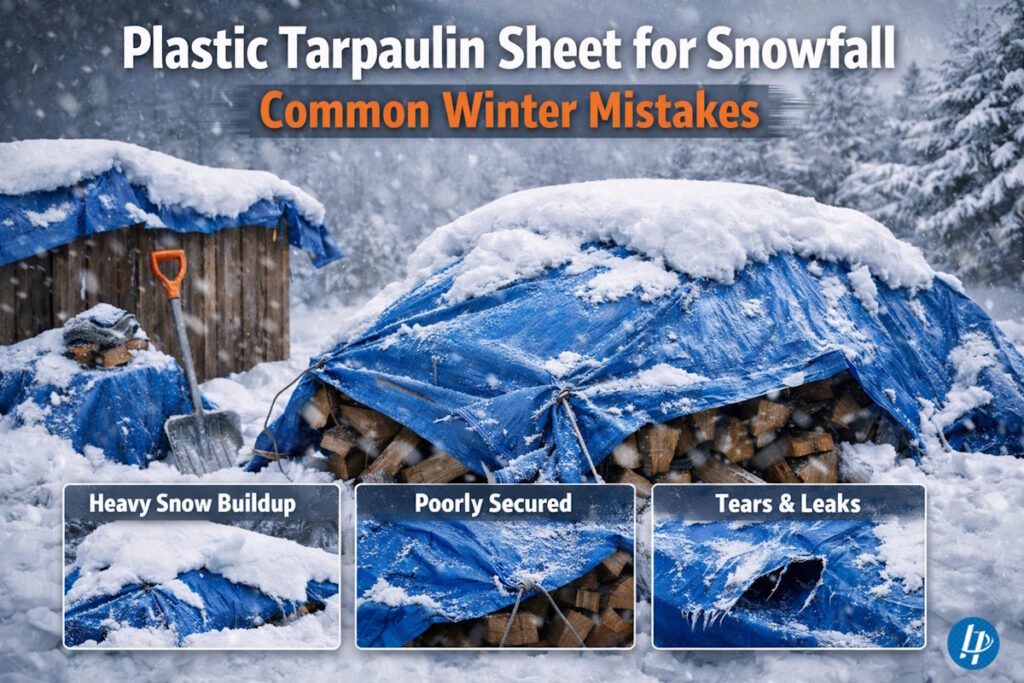
Winter snowfall can be beautiful, but it can also create serious problems for homes, farms, vehicles, construction sites, and outdoor storage areas.
Snow may look soft and harmless, but when it piles up, it becomes heavy, wet, and damaging.
Many people believe they are protected simply by using a plastic tarpaulin sheet. Sadly, most people use it the wrong way.
If you have ever covered your roof, vehicle, materials, or equipment with a plastic tarpaulin sheet during snowfall and still faced damage, leaks, or collapse, you are not alone. The truth is that using a plastic tarpaulin sheet for snowfall needs proper knowledge. Without it, the sheet may fail when you need it most.
This article will explain the common mistakes people make, the correct way to use a plastic tarpaulin sheet for heavy snowfall, and how HDPE woven fabrics can make a big difference in winter protection. By the end, you will clearly know if you are using it the right way or the wrong way.
Worried about winter snowfall damage to your property or materials?
Why Winter Snowfall Is a Serious Threat
Snowfall is not just frozen water falling from the sky. It brings several hidden risks that many people ignore.
Snow can hold moisture for a long time. When the temperature rises slightly during the day, snow melts and turns into water. At night, it freezes again. This freeze and melt cycle puts pressure on surfaces and coverings. Over time, this can cause cracks, leaks, rust, rot, and even structural damage.
Heavy snowfall also adds weight. Wet snow can be much heavier than dry snow. If your covering cannot handle this weight, it may tear, sag, or collapse. This is why choosing and using a plastic tarpaulin sheet for heavy snowfall is not optional. It is necessary.
Why Plastic Tarpaulin Sheets Are So Popular in Winter
Plastic tarpaulin sheets are widely used because they are affordable, easy to find, and simple to use. People use them to cover roofs, hay stacks, firewood, vehicles, machinery, outdoor furniture, and building materials.
Another reason for their popularity is flexibility. A plastic tarpaulin sheet can be folded, cut, and tied easily. It also works as a temporary solution during sudden weather changes.
However, popularity does not mean people are using them correctly. Many assume all tarpaulin sheets work the same way. This is one of the biggest mistakes.
The Biggest Mistake People Make During Snowfall
The most common mistake is using a thin or low quality plastic tarpaulin sheet for snowfall. Many people choose the cheapest option without checking its strength, thickness, or fabric type.
Thin sheets may work for light rain, but snowfall is different. Snow stays on the surface for long hours or even days. A weak sheet cannot handle this pressure.
Another mistake is laying the sheet flat. When snow falls, it piles up on top. The weight increases and pulls the sheet down. This often causes tearing or water pockets.
Many people also forget proper tying and anchoring. A loosely tied sheet can shift due to wind, allowing snow and water to enter from the sides.
Why Flat Covering Is a Big Problem
Covering items flat with a plastic tarpaulin sheet is one of the worst ways to protect against snowfall. When snow collects on a flat surface, it does not slide off. It stays there and grows heavier with time.
As snow melts slightly, water gets trapped. This water adds more weight and slowly leaks through stitching holes, eyelets, or weak points. Even waterproof sheets can fail under standing water pressure.
A plastic tarpaulin sheet for heavy snowfall should always be installed with a slope. This allows snow to slide off naturally and prevents water buildup.
Using the Wrong Size Sheet
Another common mistake is using a sheet that is too small. People often stretch a small sheet tightly over large objects. This creates stress on corners and eyelets.
When snow adds weight, the tension increases. The sheet may tear from the corners or rip around the eyelets. Once this happens, protection is lost.
Using a slightly larger plastic tarpaulin sheet for snowfall allows for better coverage, overlap, and secure tying. Extra material also helps in creating slopes and drainage paths.
Ignoring Fabric Quality
Not all tarpaulin sheets are made equal. Many people do not check the fabric type at all. This leads to poor performance during winter.
HDPE woven fabrics are one of the best materials for winter use. These fabrics are strong, lightweight, and resistant to tearing. They are designed to handle pressure, moisture, and temperature changes.
A plastic tarpaulin sheet made with HDPE woven fabrics offers better durability during snowfall. It resists stretching and does not become brittle easily in cold conditions.
Not sure which fabric or tarpaulin type is right for your snowfall needs?
Why HDPE Woven Fabrics Matter in Winter
HDPE woven fabrics are created by weaving high density plastic threads together. This structure gives the fabric strength and flexibility at the same time.
During snowfall, the sheet must carry weight while remaining flexible enough to adjust to movement and wind. HDPE woven fabrics perform well in these conditions.
They also resist water absorption. Snow that melts on the surface does not soak into the fabric. This keeps the sheet lighter and reduces stress.
Using a plastic tarpaulin sheet for emergency snowfall protection made from HDPE woven fabrics can prevent sudden failures during storms.
Poor Tying and Anchoring Techniques
Many people simply tie the corners of the tarpaulin sheet and consider the job done. This is another big mistake.
Snowstorms often come with strong winds. Wind lifts the sheet and creates movement. This movement causes friction, loosening knots and tearing fabric.
Proper anchoring means securing the sheet evenly from all sides. Use strong ropes or bungee cords. Tie through all eyelets, not just the corners.
For heavy snowfall areas, add extra support points in the middle sections. This distributes the load evenly across the plastic tarpaulin sheet.
Not Clearing Snow Regularly
Some people think once the sheet is installed, there is nothing more to do. This belief causes many failures.
Even the best plastic tarpaulin sheet for heavy snowfall needs care. If snow keeps piling up, the weight may exceed the sheet’s capacity.
It is important to remove snow regularly, especially after heavy snowfall. Use a soft broom or long pole. Do not use sharp tools that may damage the sheet.
Regular clearing extends the life of the sheet and keeps the covered items safe.
Using Summer Tarpaulin in Winter
Tarpaulin sheets designed for summer use may not work well in winter. Some plastics become stiff and brittle in low temperatures.
When a brittle sheet bends under snow weight, it may crack or tear suddenly. This often happens without warning.
A plastic tarpaulin sheet for snowfall should be made for cold weather. HDPE woven fabrics usually perform better in winter conditions compared to simple plastic films.
Wrong Placement Over Vehicles
Vehicles are often covered using tarpaulin sheets during snowfall. Many people place the sheet directly on the vehicle surface.
When snow melts, water gets trapped between the sheet and the vehicle. This moisture can cause rust, paint damage, and mold.
Always create a small air gap between the vehicle and the plastic tarpaulin sheet. Use support frames or poles if possible. This allows airflow and prevents moisture buildup.
Emergency Snowfall Protection Mistakes
During sudden snowfall, people rush to cover items quickly. In this hurry, mistakes are common.
Using damaged or old sheets is one major problem. Small holes may not matter during rain, but snow and ice can expand these holes quickly.
A plastic tarpaulin sheet for emergency snowfall protection should be checked before use. Look for tears, weak eyelets, and thin areas.
Keeping a high quality sheet ready for emergencies can save time and prevent panic during storms.
Covering Roofs Incorrectly
Temporary roof covering during snowfall is common, especially in construction sites or damaged roofs.
Many people lay the sheet directly on the roof without securing edges properly. Snow and wind can lift the sheet, exposing the roof underneath.
Edges should be weighed down or tied securely. Avoid using nails directly through the sheet as this creates holes that allow water to seep in.
Using wooden battens or sandbags along edges works better for securing a plastic tarpaulin sheet for snowfall on roofs.
Ignoring Drainage Paths
Snow melts into water. If there is no drainage path, water will collect.
Many people forget to plan where the water will go. As water pools, it adds pressure and finds weak points to leak through.
Always design the sheet placement so water flows away from the covered area. A sloped setup with clear drainage paths reduces damage.
This is especially important when using a plastic tarpaulin sheet for heavy snowfall on large surfaces.
Reusing Damaged Sheets
Reusing old tarpaulin sheets may seem cost effective, but it often leads to failure.
Small tears grow quickly under snow weight. Eyelets weaken with age and may pull out.
If you must reuse a sheet, reinforce weak areas using repair tape designed for plastic tarpaulin sheets. Still, this should be a temporary solution only.
For reliable winter protection, use a new or well maintained sheet made with HDPE woven fabrics.
How to Use Plastic Tarpaulin Sheet the Right Way in Snowfall
Using a plastic tarpaulin sheet for snowfall correctly is not difficult. It just requires attention to a few key steps.
1. Choose a thick, high quality sheet designed for winter use. Prefer sheets made with HDPE woven fabrics.
2. Select the right size. Bigger is better than smaller.
3. Install the sheet with a slope to allow snow to slide off.
4. Secure all sides evenly using strong ropes.
5. Check the sheet regularly and remove snow buildup.
6. Ensure proper airflow and drainage.
Following these steps can prevent most winter related damage.
Why Quality Matters More Than Price
Many people choose cheap tarpaulin sheets to save money. Unfortunately, cheap sheets often fail at the worst time.
Replacing damaged goods, repairing structures, or losing stored materials costs far more than investing in a good plastic tarpaulin sheet for heavy snowfall.
Quality sheets last longer, perform better, and offer peace of mind during harsh winters.
Long Term Benefits of Proper Winter Coverage
Using the right plastic tarpaulin sheet for snowfall protects more than just physical items. It saves time, money, and stress.
You avoid emergency repairs during storms. You reduce material waste. You extend the life of equipment and structures.
For businesses, proper coverage prevents work delays and financial losses. For homeowners, it protects valuable property and personal belongings.
Conclusion
Most people do use plastic tarpaulin sheets wrong during winter snowfall. The mistakes are common, but they are also easy to fix.
Snowfall demands stronger materials, smarter installation, and regular care. A plastic tarpaulin sheet for emergency snowfall protection can work well only when used correctly.
Choosing sheets made with HDPE woven fabrics, avoiding flat placement, securing properly, and maintaining regularly makes all the difference.
Now that you know the truth, ask yourself honestly. Are you using your plastic tarpaulin sheet the right way this winter, or are you one of the many making costly mistakes?
If you make the right changes today, this winter can pass safely, smoothly, and without damage.
Ready to protect your property before the next snowfall causes damage?